São Tomé and Príncipe - a hidden gem of Africa

As a person who has visited numerous exotic destinations, I understand the importance of nature and authenticity preservation. And the hidden gem of a country we will talk about today has both in heaps.

Located off the coast of Africa in the Gulf of Guinea, São Tomé and Príncipe is the second smallest country of the continent after Seychelles and its beauty will impress even the most intrepid traveller. This island nation is part of a volcano chain boasting of striking rock and coral formations, rainforests and beaches, not to mention its fascinating history! This unspoilt destination is safe and friendly and ecotourists in particular will find it appealing due to its Jurassic park feel.
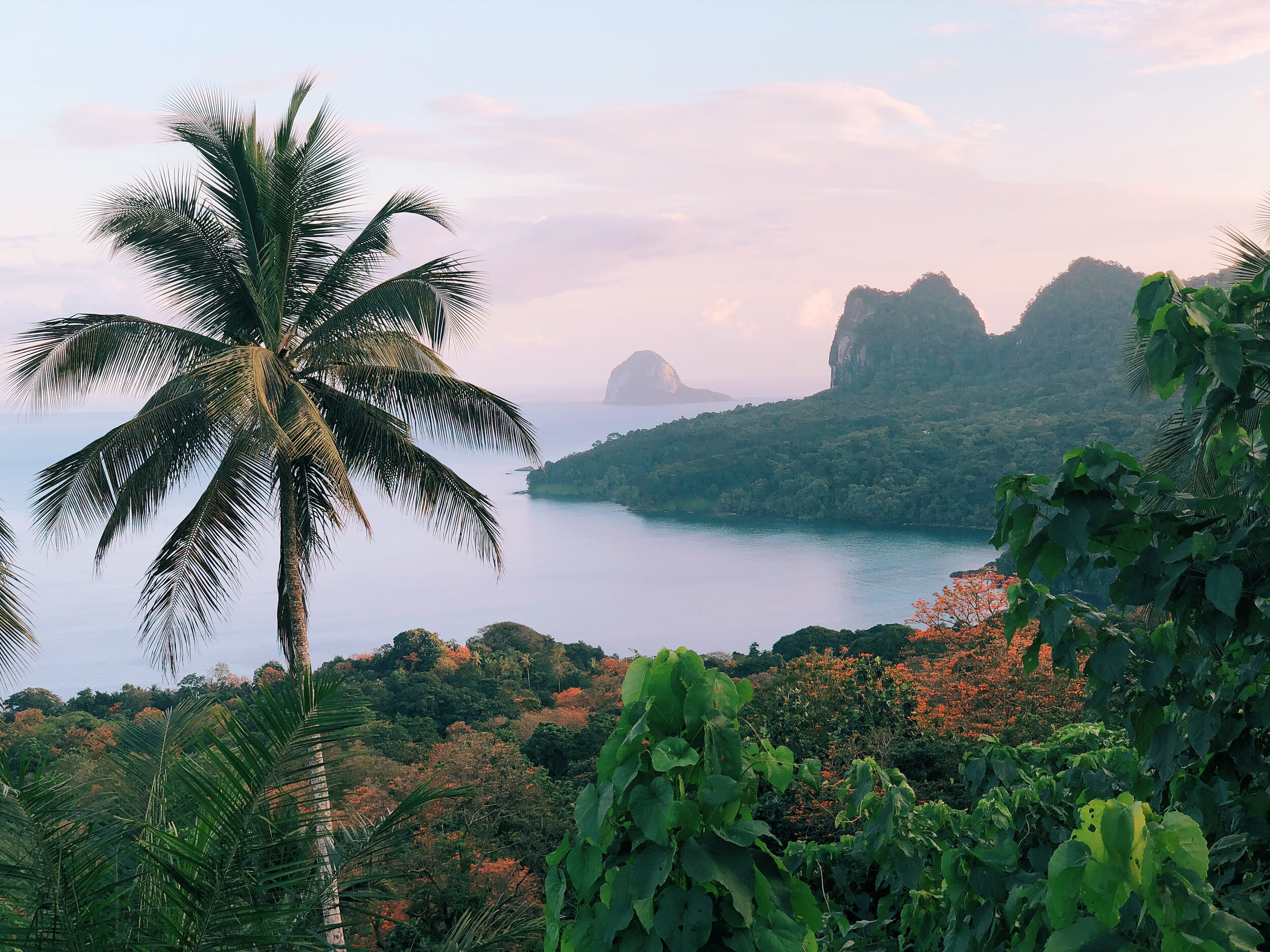
View on Principe island

Did you know that São Tomé and Príncipe have more endemic species per square kilometre than the Galapagos? In 2012 Príncipe became a UNESCO Biosphere Reserve so it’s development, including tourism, is carefully regulated under the Man and Biosphere Programme. The Principeans are proud of their biosphere status and it is something that unites islanders and visitors.
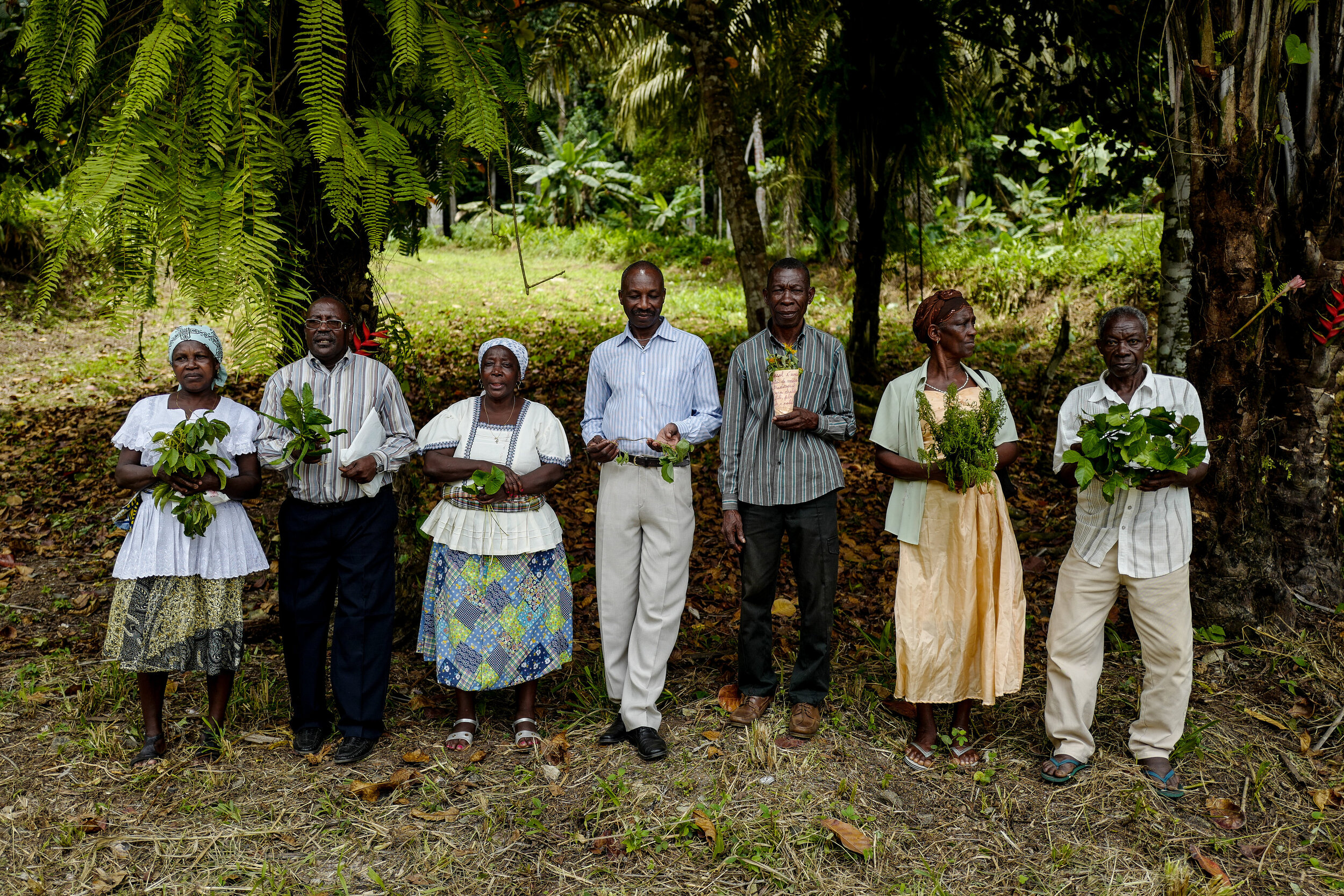
local people of Sao Tome and Principe

Quite unusually the country enjoys two dry seasons! The first one is between December and February and the second is June through September. Although the best time to bird watch is October to March - don' forget your binoculars - there is a lot to watch! The two primary islands of São Tomé and Príncipe together with several rocky islets are home to just over 215,000 inhabitants. 

So how do you travel to this little piece of paradise? The only way to get there is by flying to Sao Tome where the international airport is located. The airport on Principe is only serviced by domestic flights connecting the two islands sitting 140 km apart with the flight time taking only 35 minutes.

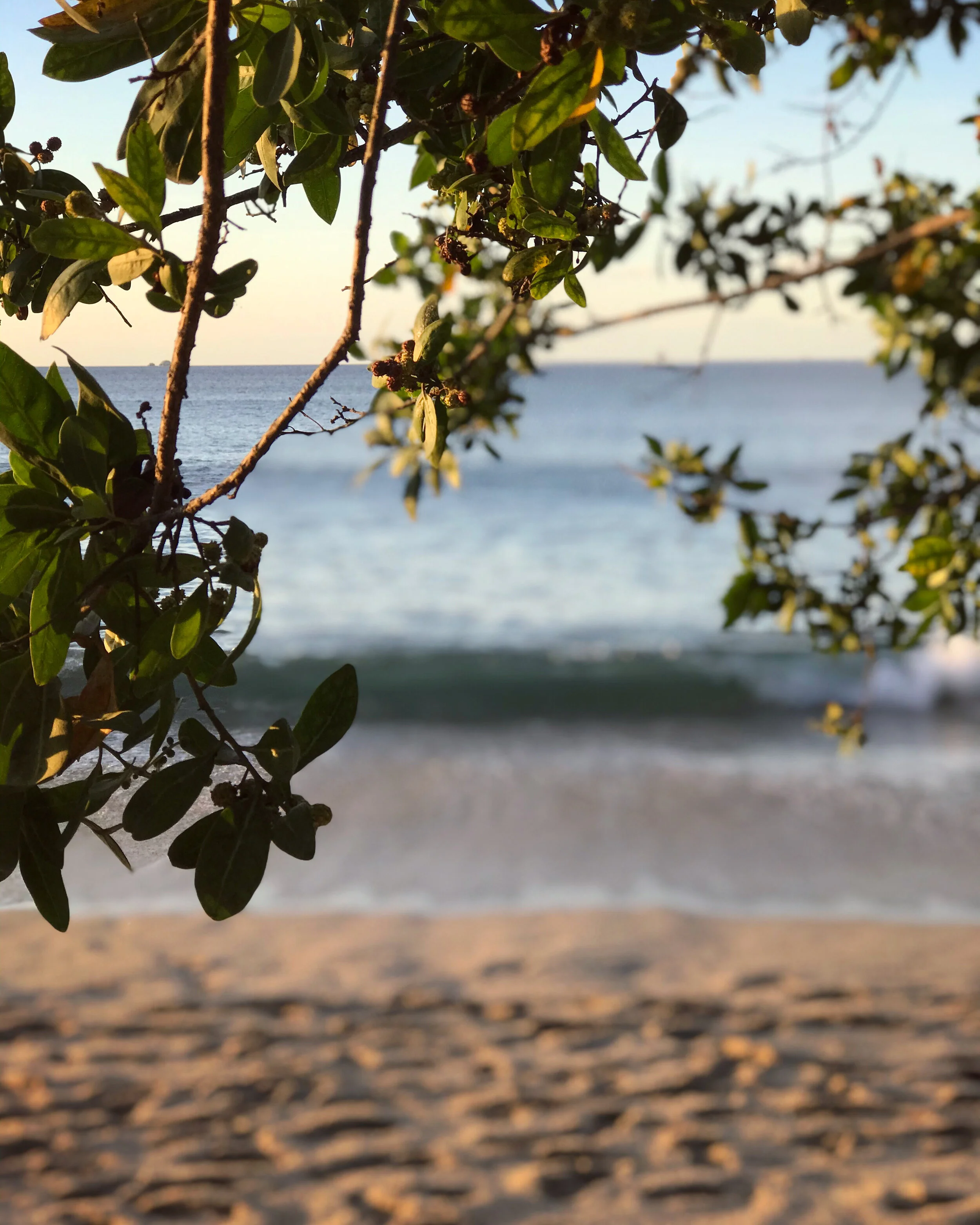
beach on Principe island

If you come from Europe, you can choose between STR Airways or TAP Portugal both flying from Lisbon. Travelling from Africa, the options are Ghana, Gabon and Angola.

 The official language is Portuguese and the long history of the country goes back to the same time as that of the Americas - the colony of São Tomé was founded in 1493, just a year after Christopher Columbus officially set foot on the continent. Sugar cane was the main commodity at the time and the remnants of historic Portuguese architecture can still be found around the islands in the form of charming colonial buildings, churches and old plantations. Presently Sao Tome is also the place where they produce some of the most exclusive chocolate in the world as well as excellent coffee! Yum!
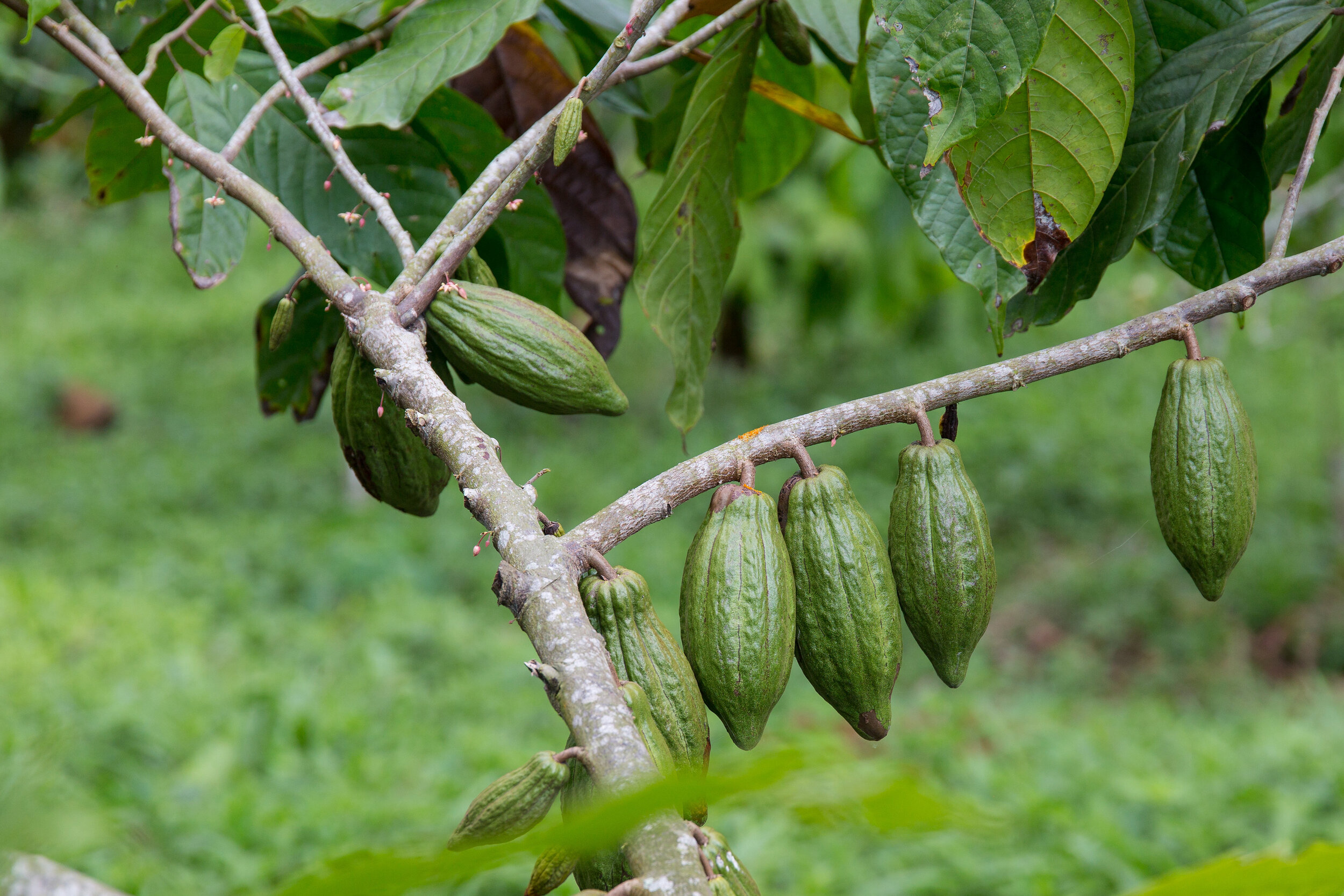
cocoa tree on Principe island

When it comes to accommodation there is a property that really stands out - we love Sundy Praia, one of the National Geographic unique lodges of the world that is a sustainable tourism project providing unforgettable experiences through interaction with the local community.

 Merging seamlessly with their forest surrounds, their 15 tented villas lie hidden among a scattering of tropical almond and banana trees, each gazing down to the sea and recreating the lifestyle of local people. 

Surrounded by the songs of birds and sounds of clashing waves you will feel free with stress just melting away. 

Sundy Praia hotel in Sao Tome and Principe | National geographic unique lodges of the world

Activities at the lodge include scenic boat trips, biosphere trails, 4X4 island tours, local fishing village and plantation visits and so much more. Female sea turtles come to lay their eggs on the beaches of Principe island between September and April and families in particular will be interested to learn about the conservation of this threatened species.

But not everything is about ecotourism here - special events such as weddings and honeymoons will become a treat that you will never forget.

I am getting itchy feet simply from writing about this stunning destination and hope you will too. Get in touch for your tailormade proposal.

Images by @HBD Principe
South Korea – a combination of Modernism and Ancient History

South Korea, in the heart of East Asia, is one the continent’s economic and cultural leaders. It is visited by millions of Asian tourists yearly, although it is still not as developed for international tourism compared to popular Asians destinations for Westerners such as Thailand or Japan.

Buddhist Temple

Buddhist Temple

I visited South Korea in April 2019. It was my first trip to an Asian country! Why did I choose this destination? That’s easy - Think ancient temples, spotlessly clean streets, cherry blossom, modern skyscrapers, Korean cuisine and a country enriched with history (and let’s not forget premium skincare).

The incredible Gyeongbokgung Palace

The incredible Gyeongbokgung Palace

One of the first things I noticed in the capital city Seoul, where I spent my hotel stay, was the Koreans’ sense of community. As an English & French native and speaking fluent Spanish, I was quite surprised to find out most Koreans do not speak any European languages! It was a challenge to speak with them but so rewarding, as it was the first time I went to a country where I could not properly communicate with a local community. It is important here to respect Koreans, to be patient in understanding each other and using body language.  

However, the locals are so welcoming and will help you if you get lost in the City. They are not used to seeing Westerners, so they feel privileged to see responsible visitors come to their small, traditional restaurants and are eager to share their culture.  

(Travel Matters Tip: Koreans love their spicy food, so if they tell you that Ramen is not very spicy, watch out, you may need a few glasses of water on the side!)

Seoul Suburbs

Seoul Suburbs

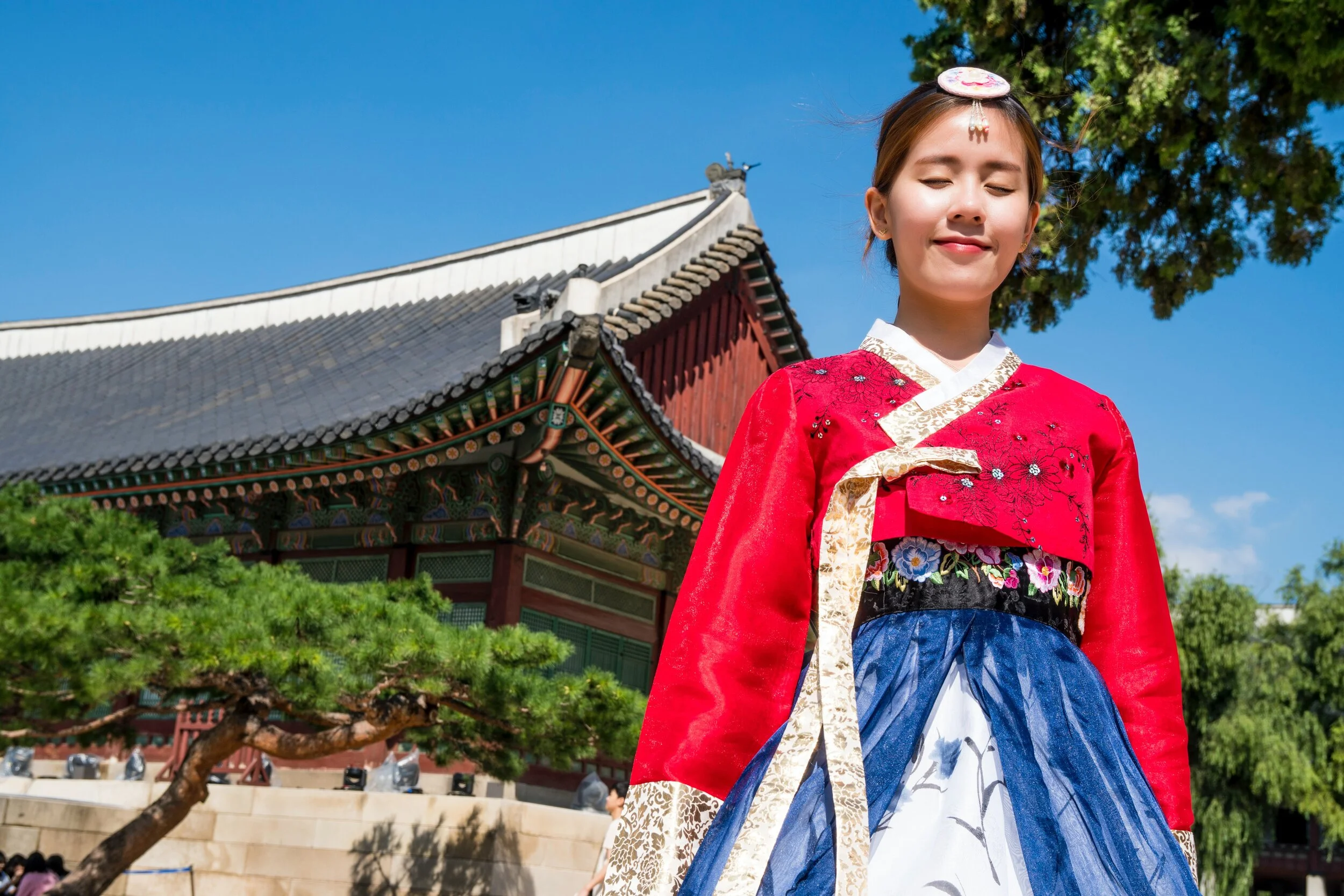
A contentious topic that I was determined to understand a little more about was regarding the use of the Hanbok (or Chosŏn-ot - a traditional clothing worn during formal occasions) by tourists -

Do you think international tourists should be given a choice to wear this traditional clothing?

Is it considered as cultural appropriation?

The Hanbok (pictured below) is an ancient traditional attire consisting of the dress, headgear and accessories. I asked locals regarding this subject, and whilst everyone can have their own opinion, Koreans mostly do not mind it. In fact, they encourage travellers to try on the dress as they feel proud it is part of their national culture and they love to share this with foreigners. Indeed, it is very common to pass by small shops that offer a day Hanbok rental!

Hanbok, or Chosŏn-ot

Hanbok, or Chosŏn-ot

So, is South Korea on your bucket list of responsible travels?

(Sophie travelled to South Korea in April 2019)

Italy – Liguria, Cinque Terre and Portofino visits

Liguria is a region in northwest Italy and its Mediterranean coastline, known as the Italian Riviera, stretches from Tuscany to the French border.

The Ligurian coastline is simply stunning. There are no beaches to speak about, but each little cove is just so pretty and inviting often with small ladders attached to a rock for direct sea swimming.

liguria portofino.jpg |make travel matter | summer holiday in Italy |

Ligurian food is delicious, with lots of seafood and vegetables, the region is famous for its tomatoes, olives, asparagus, peaches and artichokes. Speciality dishes often include pesto – and the pasta we had was served with both tomato sauce and pesto. 

The main reason we came to Liguria was visiting the famous Cinque Terre – five former isolated fishing and agricultural villages that are now the major attraction of the region. Just like Venice, the villages suffer immensely from over-tourism, hence our decision to visit them right after the borders opened post lock-down. 

We could even afford the luxury of driving there – something that is normally discouraged, due to limited parking spaces and narrow hairy roads. The drive is very picturesque but you do need to be a very confident driver. The roads are relatively new, as previously the villages could only be accessed by boat. As a travel agent, I would recommend taking a train instead by purchasing a Cinque Terre pass, allowing you  to take unlimited train journeys between villages and La Spezia as well as using hiking trails. Our favourite village was Manarola and many people specifically come there for a sunset drink.

cinque terre make travel matter | summer holiday in Italy |

During our stay we based ourselves in Santa Margherita Ligure, a really lively former fishing village with a great atmosphere and loads of seaside restaurants and boutique shops. 

We really enjoyed our stay at the elegant Grand Hotel Miramare, a member of The Leading Hotels of the World with views to die for. Our room with sea view and balcony was just so beautiful and comfortable. We loved both the sea water pool and the beach club – a real luxury, that not many hotels in the area can boast.

grand hotel Miramare in Liguria.jpgmake travel matter | summer holiday in Italy |

One of the most beautiful places in Italy, Portofino is only a few minutes away by boat or taxi. Or how about taking a scenic 40 min walk like we did?

The second hotel in the area that I  had a chance to visit was Belmond Hotel Splendido, without a doubt the most luxurious and exclusive hotel in the area with the views as splendid as the name suggests. Their rooms and suites exude sophistication and almost all of them have enchanting sea views.

belmond Splendido portofino.jpgmake travel matter | summer holiday in Italy |

As the hotel is located in an elevated position, there is no beach access, but guests have a chance to rent a private boat and go swimming anywhere they want, be it Cinque Terre or the gorgeous beach of San Fruttuoso. Alternatively there is an option to walk or take a short ride to the beautiful Paraggi beach, walkable from Grand Hotel Miramare also, we really enjoyed our dip in the sea there. 

I am really delighted that I had a chance to visit this beautiful area of Italy and will be definitely recommending it more to our clients. 

Give us a call on 0208 675 7878 to discuss.

Maryna travelled to Italy with her husband in July 2020

Empowering women farmers through tourism

This guest blog was written by Tricia Barnett, Director of Equality in Tourism.

Equality in Tourism believes tourism should be fairer for women. We are a charity working to put gender on the agenda of global tourism. We want women all over the world to enjoy equal benefits of tourism, because in general they don’t. It’s not at all unusual for women to be working at the in the least well paid jobs with little opportunities for training. For example, a housekeeper in an award winning eco hotel in a country like Sri Lanka or Kenya might just earn £1 a day. She also might be struggling with a split shift, which means she hardly gets to see her children. But there are all sorts of ways that women can benefit from tourism and it’s so normal to see women selling their handicrafts or opening their homes for visitors to stay. For many of these women, tourism has been empowering.

Women farmers in Tanzania

Women farmers in Tanzania

But there are also people who live in successful tourism destinations who live in a parallel universe and have no idea how they might benefit from the visitors who are in a separate bubble. Equality in Tourism has our own path breaking project in the Kilimanjaro region of Tanzania. So many people come to climb the iconic mountain, but all around are impoverished families living a subsistence life. Many of these are farmers, and in Tanzania as elsewhere in the world, it is women who are the farmers. 

Four years ago we began work with a local women’s empowerment organisation, KWIECO ww.kwieco.com 

to train the most marginalised farming women in better farming methods, farming as a business, entrepreneurship and women’s empowerment. The objective was to help them create a co-operative which would supply the many local hotels and lodges with quality fruit and vegetables. Before training, they competed with each other in the market place to sell their produce to dealers. Prices were very low. So low, that when we first began work with the women and started a microfinance scheme, some couldn’t even save 30 pence.

MoF2Mj5gS6mrRb0OByj0.jpg

Our business plan showed that the co-operative, Wamboma: Women Farming for Their Future, would be self sufficient in three years. They opened a shop. But then climate change created floods and drought that destroyed three crops. We raised money and now they have industrial sized greenhouses, drip irrigation, tanks and pumps. 

We were back on our feet. Until Covid-19 closed all the hotels and tourism came to a halt. 

We have always operated on a shoestring. But now we are stuck. The women are back in the market place and not getting the cost of their labour back as they sell at low prices once again. Having saved brilliantly and made use of their loans to send their children to university or buy a sowing machine or improve their farms, they can no longer save. What is such an important asset though, is that they have, for the first time in their lives, food security. 

We have had to think on our feet and the women would like to be trained to dry their produce and – a very western suggestion – to create farm boxes. All of this needs investment for training and equipment and a website, so we need to fundraise again. 

The results have been life changing. We would love to take the learning and share it elsewhere where women farm and tourism is a key industry.

Tricia at a weekly meeting in Namwai

Tricia at a weekly meeting in Namwai

The women, who were the most marginalised in their communities, are now sought out for their advice. They are managing the shop and their savings and their production. They are working together. They are challenging their men to support them better and are being supported to fight against gender based violence that has been rampant. It is quite wonderful to hear from the women how the project has changed their lives. Before the pandemic, a big adventure operator was organising for their tours to come to the villages and meet the women and see what they’ve achieved and to buy their produce. 

One day, perhaps you will be able to as well. You would be very welcome. 

Tricia Barnett 

www.equalityintourism.org 

Director 

Equality in Tourism

Corfu - an enjoyable September break

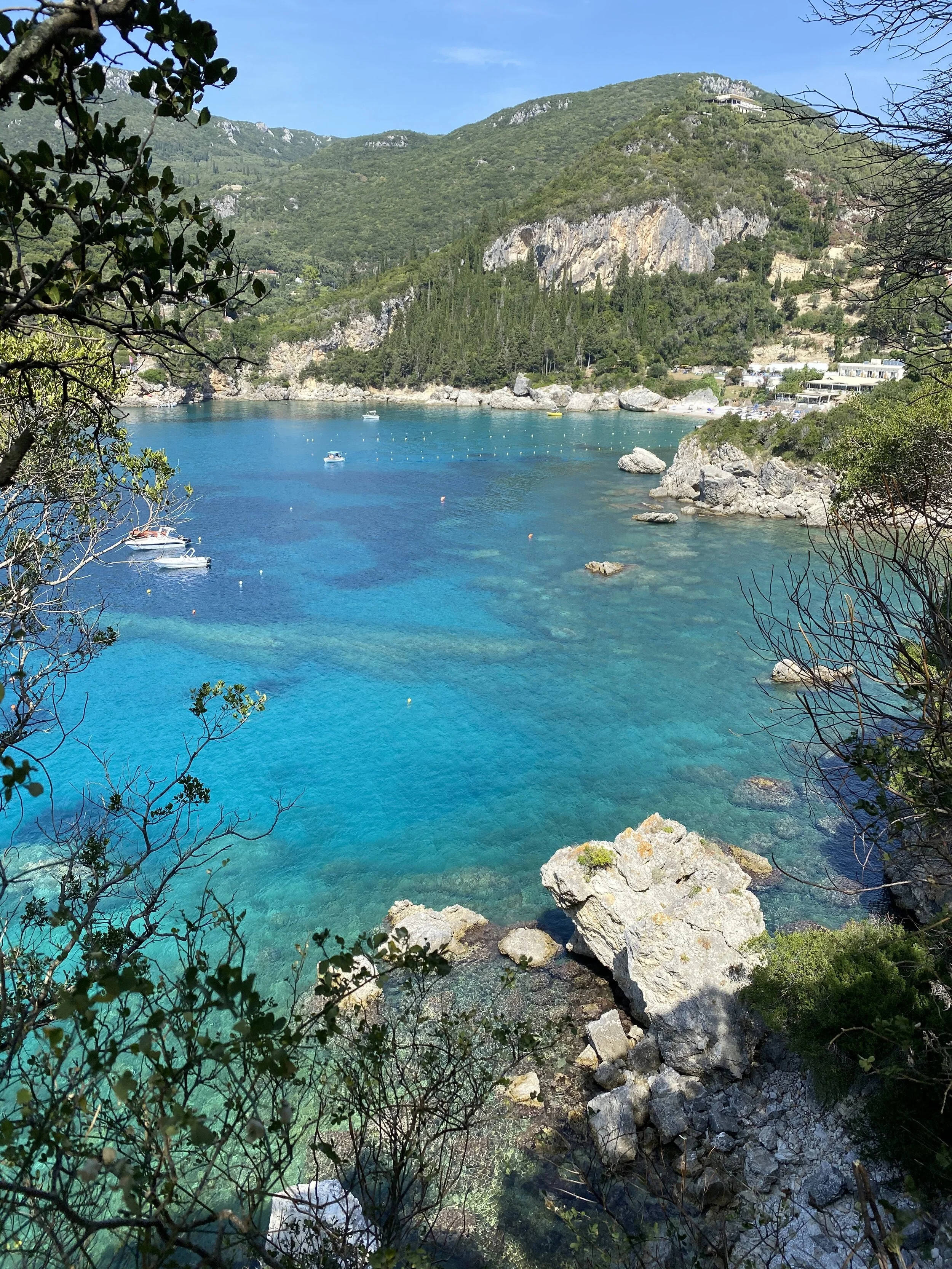
The island of Corfu, or Kerkira how it is known in Greek is the northernmost of the Ionian islands. Being so close to the mainland the island is very verdant and fertile, with orange and olive groves covering large areas of the island. I also loved how rugged the shoreline was, with picturesque wild beaches hiding in pretty coves.

Beautiful beach in Southern Corfu

Beautiful beach in Southern Corfu

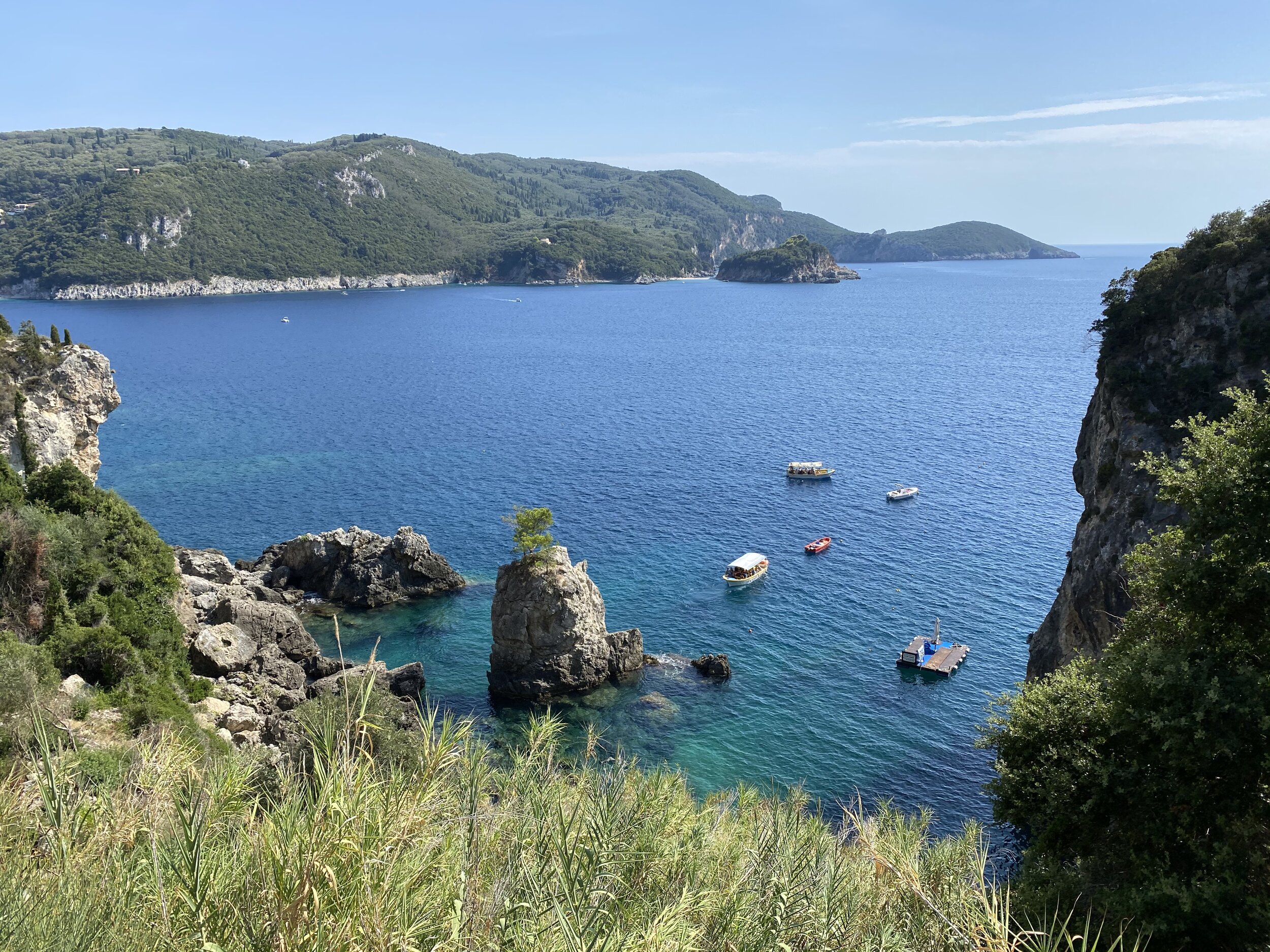
Being a mountainous island, Corfu has several stunning viewpoints with views stretching to the mainland Greece and neighbouring Albania. In fact, day boat trips to these two destinations are very popular along with an alternative of visiting Paxos and Antipaxos. The sea around these islands is stunning, the water is so turquoise that this stretch is often called Mediterranean Caribbean. It really is dreamy and numerous caves add even more to the experience. No wonder renting a boat is a very popular past time in Greece!

A beautiful beach on the island of  Corfu in Greece| holiday in Greece | make travel matter|  Responsible tourism | travel agent in London | bespoke holidays | sustainable travel | summer holiday ideas | family holidays

One of the main reasons why this island is so good for families is that it never gets too hot, even in summer the average temperature is 29-31 degrees – very comfortable compared to the southern islands. Having travelled in mid-September we were spoilt by hot and sunny weather but Corfu is excellent for spring breaks, too, when the hypnotising smell of orange blossoms fills the air. The average temperature in April is 20 degrees and is ideal for exploring Corfu old town. This UNESCO heritage site is the perfect example of Byzantine and Venetian architecture. Having travelled to Venice back in July, it was astonishing to see how similar the buildings looked! Corfu old town is built between two ancient fortresses and is resembling an open-air museum.

Lunch at a local taverna

Lunch at a local taverna

Did you know that Prince Philip was born in Corfu and you can visit the historical Mon Repos palace where he spent his early days?
I highly recommend hiring a car or a quadbike and explore the island. I especially loved the unspoilt southern cost, covered in pine and olive trees – beach hopping there was the highlight of our trip and we particularly liked the secluded Rovinia beach.

Steps to Rovinia Beach

Steps to Rovinia Beach

It is a bit of a hike down the hill, but totally worth it! Another trip highlight was stumbling on Halikounas lake full of flamingos!The Korission lagoon attracts thousands of flamingos every year and the best time for bird watching is between May and early October.

Halikounas lake

Halikounas lake

The hotel we chose as our base was MarBella Corfu, a very comfortable and popular family resort that is one of our best sellers in Corfu. The location is very scenic, overlooking the mainland and away from the hustle and bustle of busier parts of the island yet only 30 min away from Corfu town and the airport by local bus or a taxi. The resort offers several board basis options from Half Board to All inclusive. We went for Half board allowing us to have lunch in local taverns and enjoying buffet dinner at the hotel. We found the buffet to be really good, always with generous portions of Greek salad, good selection of grilled meats, fish and vegetarian dishes.

A Greek salad in a restaurant on the island of  Corfu in Greece| holiday in Greece | make travel matter|  Responsible tourism | travel agent in London | bespoke holidays | sustainable travel | summer holiday ideas | family holidays

The menu was changing daily and we never got bored with the food choices available. All-inclusive clients have a chance to dine at the a la carte restaurants three times per week, as well as have other additional benefits, so upgrading is really worth it. 
Marbella Corfu boasts a blue flag beach and we loved the options of swimming off the pebble beach as well as diving right into the sea from the platforms. 

Beach at MarBella Corfu

Beach at MarBella Corfu

Our Superior Seaview room was very comfortable and contemporary, with a balcony overlooking the sea. We really enjoyed our holiday to Corfu as it was a fantastic balance between relaxation and exploring. 

Give us a call on 0208 675 7878 to discuss your next holiday.

Maryna travelled to Corfu with her husband in September 2020

Island-hopping in Venice

Venice needs no introduction, if you ask what the most famous city in the world is, I am sure it will come right at the top of the list.

A canal in Venice in Italy | holiday in Italy | make travel matter |  Responsible tourism | travel agent in London | bespoke holidays | sustainable travel |  holiday ideas | family holidays | romantic breaks

As well-travelled as I am, I have never been to Venice before. One of the main reasons was over-tourism – Venice has been known to receive over 20 million tourists per year, particularly shocking considering its local population is only 55,000. But with the ban on cruise ships and diminished crowds post lockdown, I thought that there was no better time to go.

I don’t think all people realise that travelling to Venice is not just about the city alone, but also about the numerous islands scattered around it. Venice itself has a very unique geography and is sprawling over 118 submerged islands connected by over 400 bridges. Everything there is managed by waterways, from public transport to emergencies – we purchased a Vaporetto Pass during our stay. A Vaporetto is a form of public transport in Venice, like a bus or a tram in the UK. They have numbers as well as dedicated stops and a time table. With an outside seating area and fresh sea breeze, it is a far cry from the miserable commuting we are used to here.

A 24-hour Vaporetto Pass costs 20 Euros and this is such an enjoyable way to hop on and off whilst exploring the beautiful islands of the Venice lagoon. Alternatively, why not treat yourself and hire a private boat with a guide?

We visited three of the islands during our visit. Burano turned out to be our favourite, just so picturesque with its canals and colourful houses, it has a real fishing village feel and is famous for its lace-making. It takes about 45 minutes to reach it from Venice.

A canal in Burano/Venice in Italy | holiday in Italy | make travel matter |  Responsible tourism | travel agent in London | bespoke holidays | sustainable travel |  holiday ideas | family holidays | romantic breaks

If you are looking for a trattoria to eat like a local, Burano is known for their seafood dishes, the most famous of which is the “risotto de gò”: the broth in which the rice is cooked is extracted from the “gò” a fish typical of the Venice lagoon.

Torcello is located only a few minutes away from Burano and is very rural and green in comparison and is a beautiful spot for lunch – if you haven’t been treating yourself already to some Risotto de go! We were particularly delighted with a carafe of locally produced Prosecco served from a tap!! ! Due to the density of buildings, Venice itself can’t boast of much greenery, which is why Torcello provides a very contrasting experience with its peacefulness, loud crickets and vineyards. The island is sparsely populated and provides an interesting glimpse into island living.

The island of Torcello Venice in Italy | holiday in Italy | make travel matter |  Responsible tourism | travel agent in London | bespoke holidays | sustainable travel |  holiday ideas | family holidays | romantic breaks

Tourists come to visit the Basilica di Santa Maria Assunta, with its Venetian-Byzantine mosaics and the views of nearby Burano from the bell tower, or to check out the Ponte del Diavolo, a bridge with no parapets, and the stone seat known as Trono di Attila. 

And lastly we visited Murano the island closest to Venice that has been famous for centuries for its glass making. 

When in Venice do not miss out on visiting these islands. If only we had more time to visit other nearby islands like Lido, where Venetians go for some beach time. 

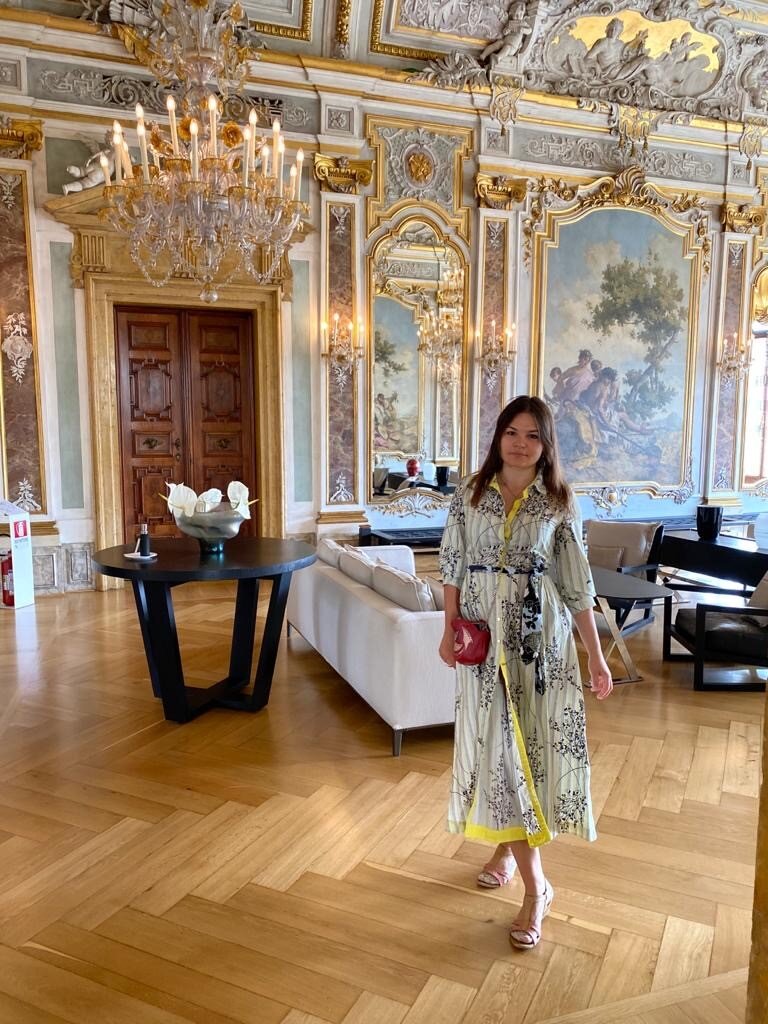
We had a chance to experience two properties in Venice. We were beyond impressed with our stay at Aman Venice. Arguably the most exclusive hotel in Venice, this historic palazzo has the largest front garden overlooking the Grand Canal in the city and only 24 keys. The rooms are contemporary and very spacious with the most comfortable beds and a free minibar. With the limited number of rooms and a great number of common areas, one does feel like a valued guest of a Venetian prince. I can’t recommend it highly enough for the discrete yet attentive service, fabulous cuisine and the tranquil atmosphere. A very special property for special occasions!

A city break at Aman Venice in Italy | holiday in Italy | make travel matter |  Responsible tourism | travel agent in London | bespoke holidays | sustainable travel |  holiday ideas | family holidays | romantic breaks

The second property was the lovely Londra Palace overlooking the Lagoon. It is a member of the prestigious Relais and Chateaux group and a perfect option for those looking to stay in the very centre of the city – St Mark’s Square is literally around the corner and a Vaporetto stop is just in front of the hotel. The hotel is charming and intimate, each room unique due to original architecture but always comfortable and with beautiful views, be it the lagoon or the red roofs of the city. We loved our room with a balcony overlooking the lagoon!

A weekend away at Londra Palace  in Venice in Italy | holiday in Italy | make travel matter |  Responsible tourism | travel agent in London | bespoke holidays | sustainable travel |  holiday ideas | family holidays | romantic breaks

For sure our trip to Venice was enjoyable, even more so with a chance to visit all these pretty islands. Can’t recommend it enough!

Call us on 0208 675 7878 to discuss your holiday to Venice!

Maryna travelled to Italy with her husband in July 2020

Ride4Rangers
Ride4Rangers for Tusk | safari | holiday in Africa | make travel matter |  Responsible tourism | travel agent in London | bespoke holidays | sustainable travel |  holiday ideas | family holidays | romantic breaks

Africa specialist tour operators have come together to support African rangers & wildlife by embarking on a cumulative bike ride which is being kick-started with an initial Land’s End to John O’ Groats challenge starting at 9 am on 15th August 2020 where a core peloton of 10 people will be joined by 40+ others, all of whom are combining mileage working towards a 30,000KM total – the equivalent of circumnavigating Africa.

Ride 4 Rangers is an initiative by the UK Africa Travel Industry in aid of Tusk which will see the team ride the 874 miles from Land’s End to John O’ Groats and is inviting hundreds of fellow Africa Travel industry professionals, Africa and wildlife lovers to join them on the way. The ride is part of the wider Wildlife Ranger Challenge, launched to support thousands of wildlife rangers across the African continent to face the threats posed by the Covid-19 pandemic. Through the Wildlife Ranger Challenge, every pound donated to Ride 4 Rangers will be matched by the Scheinberg Relief Fund.

Ride4Rangers for Tusk | safari | holiday in Africa | make travel matter |  Responsible tourism | travel agent in London | bespoke holidays | sustainable travel |  holiday ideas | family holidays | romantic breaks

We miss our incredible opportunities to connect with nature and animals on an unbelievably intimate level. The African continent has been beyond generous to all its visitors over the past 150 years, hosting us and enchanting us each and every time. This time, it is our chance to give something in return and help support our beloved Wildlife Rangers.

Kenya’s number of elephants have more than doubled since 1989 thanks to a mission to stop poaching. All of these conservation efforts have had positive outcomes over time however, because of a decrease in the number of international tourism, the very animals we’ve been protecting for so long, are now at risk. This is our chance to make a difference and participate in a not only charitable activity, but also an experience that will benefit our mental and physical wellbeing. Cycling has countless proven benefits such as increased cardiovascular fitness, increased muscle strength and flexibility, improved joint mobility, decreased stress levels, improved posture and coordination.

Ride4Rangers for Tusk | safari | holiday in Africa | make travel matter |  Responsible tourism | travel agent in London | bespoke holidays | sustainable travel |  holiday ideas | family holidays | romantic breaks

Alongside the Land’s End to John O’Groats ride, 15th August also marks the start of a series of global Ride4Rangers events and activities where Africa and wildlife lovers across the UK, Europe and 9 African Nations (Kenya, Tanzania, Ethiopia, Uganda, Namibia, South Africa, Zimbabwe, Zambia and Mozambique) are getting involved clocking their own miles and raising vital funds.


The route will journey throughout the UK from Land’s End to John O’Groats via traditional LEJOG routes. For the full map visit:

 https://ridewithgps.com/routes/33296734 

Ride4Rangers for Tusk | safari | holiday in Africa | make travel matter |  Responsible tourism | travel agent in London | bespoke holidays | sustainable travel |  holiday ideas | family holidays | romantic breaks | Ethiopia

Wondering how to get involved?

Visit www.ride4rangers.com

15 Aug–29 Aug Join all or part of the ride from Land’s End to John O’Groats

or

Do your own Ride 4 Rangers at home, in a park, around your garden 5, 10, 20, 50 KM

Ride 10KM, Donate £10, Nominate 3 People

or

Simply donate on our crowdfunding page

Future for Tourism

The path to change is a journey and lasting solutions take time. For over twenty years, we have been actively advancing holidays which have been pushing towards a more just, equitable, and sustainable future for all. We are now standing alongside a coalition of six leading organisations that have made their global mission to place destinations at the very centre of their recovery strategies. The Future of Tourism Coalition is a collaborative effort to chart a new, more sustainable direction for tourism and shift the status quo. The Coalition is comprised of six non-governmental organisations The Center for Responsible Travel (CREST), The Destination Stewardship Center, Green Destinations, Sustainable Travel International, Tourism Cares, The Travel Foundation.

The Future for Travel Coalition has will support the industry by providing the tools, guidance and collaboration to ensure a stronger path forward and encourage a diverse and inclusive set of signatories to sign on and share their perspectives and experiences to collectively work towards building a more sustainable way of exploring the world in a more conscious and responsible manner.

The Coalition has collaboratively developed and launched a set of Guiding Principles that outline a bold vision for tourism's path forward. The 13 principles provide a clear moral and business imperative for building a healthier tourism industry while protecting the places and people on which it depends.

Future for Tourism Guiding Principles 1.png
Future for Tourism Guiding Principles 2.png

The Coalition is calling upon tourism agencies, travel companies, governments, investors, non-governmental organisations, and destination communities to sign on to these Guiding Principles. By voicing our commitment, signatories agree to align their strategies and actions behind this transformative set of principles as we attempt to move forward from the COVID-19 pandemic. We can only make a positive change on a large scale if we act in unity and transparency.

If you feel like you as an individual or the organisation that you work for might be interested in pledging your support, you can become a signatory here.

A personal reflection halfway through 2020

Our world is being shaken. Writing personally, Covid 19 has given me the chance to reflect on my actions, goals and ambitions, questioning my individual place and role in society. Adding to the pandemic fear, there are the demonstrations and protests around the globe, speaking out against racial inequality with the Black Lives Matter Campaign. Both have impacted society in a great wave, fuelling a sense of social discomfort and pain.

As an owner of an established travel business, I've certainly wrestled with thoughts and unanswered questions about the future, especially the industry I only really know - travel & tourism. On the environmental impact, realising the stark reality of the negative impacts of tourism, I signed a declaration Tourism Declares a Climate Emergency at the start of 2020. Bitter sweet that a global pandemic has brought the travel and tourism industry to a virtual standstill, with lack of demand for airlines, cruise lines, hotels, railways, car rental companies, tour operators and travel agencies like Travel Matters, my business.

Travel Matters - established 21 years

Travel Matters - established 21 years

On the social impact, I am reminded of the International Institute For Peace Through Tourism (IIPT) a not for profit organisation dedicated to fostering and facilitating tourism initiatives which contribute to international understanding and cooperation. A movement to preserve heritage, create poverty reduction and heal the wounds of conflict through initiatives to help bring about a peaceful and sustainable world.

As I see the world opening up again to the movement of people, I realise that I have my greatest opportunity to do things better. To use common sense, to be responsible and mindful when I travel, respecting the host communities I visit, remembering that it’s their environment, their destination I pass through, sensitive to the land & nature around me, enhancing my knowledge of other countries and cultures. This code of conduct and awareness should apply to how I live at home as well as when I travel. The Make Travel Matter campaign was created to help with those tips and ideas. It’s a campaign that I have wanted to share with everyone who knows me personally, as well as those who I have not met.  

Women heading off to pick tea

Women heading off to pick tea

Early in 2020, Travel Matters partnered with Jump, the UK’s leading supplier of employee engagement programmes that drive sustainable behaviours within a range of industries. From corporate employers to university students, Jump has a proven record of 15.2 million positive actions recorded. By promoting Jump within the travel industry, we’d love to drive positive change across the entire sector. As part of our Make Travel Matter campaign, we’re actively encouraging other industry partners and travel companies to look at their impact, producing a chain effect in the travel sector. A focus on behavioural change is the main ambition of this initiative. The travel sector, pre covid 19 employed over 300 million people globally. As a result of the coronavirus pandemic, the global travel and tourism market is predicted to see a loss of over 100 million jobs worldwide in 2020 alone. It’s utterly devasting, however, I cannot give up hope.

Travel Matters partnership with Jump

Travel Matters partnership with Jump

What else can we do at Travel Matters? We’ll continue to engage with travellers who are keen to broaden their perspective, venture to new places, connect with new people, learn about different cultures and heritage as well as build international relationships. We know all too well that nothing changes the way you view your own life experience like seeing the way other people live. Your visit to a destination can provide an important source of income and sometimes the most important stream of revenue in many countries and regions around the world. Tourism creates many job opportunities and we can’t forget that.

In conclusion, despite the setbacks, doubts and fears, I’m persevering in my role within the travel industry as a business owner, keen to be a kind global citizen, eager to participate in IIPT’s vision of the travel and tourism industry – to become the world's first global peace industry; sharing the belief that every traveller is potentially an "Ambassador for Peace.”


Karen Simmonds is the owner of Travel Matters

Make Travel Matter COVID-19 Response
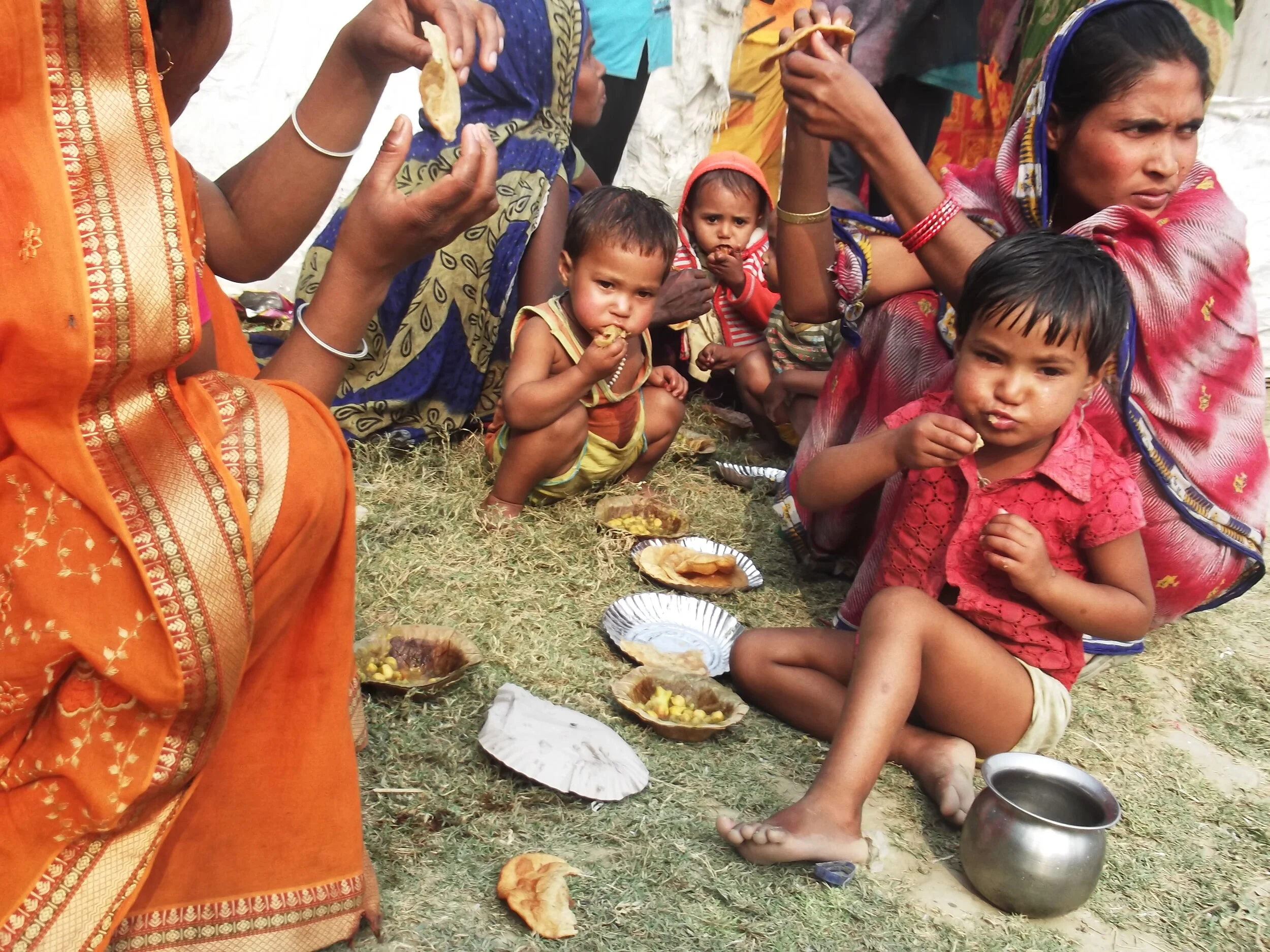
Children eating (7).JPG

Coronavirus, as well as other preventable diseases, is hitting some of the world's poorest countries and most vulnerable people; many who live in crowded conditions, with limited water, sanitation and health care. These people are also often living day to day, without enough savings or food to be able to stop working and stay at home. People are affected by coronavirus financially as all travelling has stopped, bringing economies to a halt. We want to help the millions across the world who do not have access to safe water let alone hand washing facilities or soap. We created a campaign to help the communities we’ve all visited, engaged with and learned from throughout our visits and holidays over the years. We felt the need to do something practical in these challenging times. In response to that need, we decided to set up a donation page, requesting for your generosity.

Well pouring water.jpg

At Travel Matters we have sent you to places far and wide as well as travelling to many destinations all over the world ourselves. We have seen with our own eyes the communities in deprived areas of the globe. So with the spread of the coronavirus right now, the situation is utterly heart breaking.

I started Travel Matters and the campaign Make Travel Matter because I love travel, I love connecting to people, learning about new cultures and I care about people. The travel & tourism industry inspires us, connects us, creates new opportunities and jobs within communities. When done responsibly, it can be an industry that is beneficial to all.

The coronavirus outbreak is affecting everyone in the world. We are told that hand washing with soap is the first line of defence against the spread of infectious diseases like COVID-19, yet millions across the world do not have access to safe water let alone hand washing facilities or soap.

Girls eating.jpg

We will support the communities we work with, helping to provide safe water, better sanitation, food and hope. Our charity partners are Just a Drop, Empart UK & The Travel Foundation.

Please help to support our beloved communities around  the world. We want to be positive change-makers for the people and the planet and when it is safe again, we can travel with intention and purpose. Click the button below to check out our Just Giving page.

Larvik & Oslo City Break

The trip begins here. As I sit on a train which is travelling on the only track it can, I realise that my thoughts are freed from the tracks they are usually on a Thursday. Surely travelling away from your own direction of thought is one of the best escapes you can have? Another realisation is that I have everything I need for the next couple of days in my 40x25x20cm bag, or as close as my bag collection allows. Amazing how saving money can push us into accepting such strict criteria. If I were at work, I’d be calling the managers dictatorial and fascist but from a flight operative that’s willing to take me somewhere else for £25 less if I don’t pack a pair of shoes, I’ll take it.

From the airport, the train to Larvik travels through central Oslo. We decide to take this opportunity to break our journey. We start to list our limited knowledge of famous Norwegians; the scream painting by Edvard Munch, we’d enjoyed the light exhibitions at the Tate and National by Olafur Eliasson (no, just checked – he’s Danish/Icelandic), the Manchester United manager, Ole Gunnar Solskjaer...at this point a young man opposite intervened to confirm our limited knowledge. We asked what we should do with a couple of hours in Oslo and when he found out we were from London he became embarrassed and thought we would find Oslo very boring.

We did not. It was very charming. I liked the fact you could hear the hubbub of conversation in the street against a backdrop of tuneful church bells rather than the roar of traffic. The weather was glorious, blue skies and a sprinkling of snow and down at the waterfront the light was intensified by the reflection of the sun. It was good to experience this light as on our return through, Oslo was bathed in grey. Although cold outside, every indoor space we entered was warm (when have you ever been in a warm cathedral?) 

Traditional fare for lunch; meatballs, potatoes, mushy peas and lingonberry for me; dumplings, mutton sausage and swede for my husband. As heavy as you’d expect it to be but tasty.

Farris+Bad+Hotel+Spa.jpg

Our first time together in a spa hotel and we found ourselves to be a tad uptight about the etiquette. We shower in our room without the prescription swimsuit on (a merciless brown affair for both sexes) then put it on followed by a brown bathrobe and sliders. We pick up our Turkish towels and step out into the corridor feeling slightly mortified as we walk through the hotel to the spa. 

We arrived quite late, 8:30ish with a closing time of 9 pm and fortunately find the outside jacuzzi lit by a flame lamp. We get in and the bubbles lift our bodies to the surface as the steam rises and we raise our eyes to the moon and relax. All too soon a young woman comes to put out the lamp and says the spa is closing. So off we wander keen to get a quick glimpse of the rest of the spa before it closes. My wandering is disturbed as I turn around to see my husband, dimly lit in the frame of a door, addressing the young woman between us in a tone of voice I associate with a naughty toddler being caught out.‘ Ahh, I’m all wet, sorry- err my dressing gown’. He had walked into the mineral cave, a warm but deep pool. The girl, itching to get home no doubt, graciously deals with the last irritating guests and I laugh and laugh, with no feelings of mortification, all the way back to the hotel room.

They sell romantic packages at the spa but I reckon we got the best romantic experience you can have; doing something stupid and then being able to laugh like drains about it. 

We head to the bar, laugh some more and order some beer, two ceviches, patatas bravas and a goats cheese salad. All fresh but slightly lacking in flavour. 

We spent a very comfortable night in our room, laying our heads on enormous pillows as our bodies melted into mattresses and our minds were lulled to sleep by the soft lapping of the waves.

Farris Bad hotel Spa.jpg

In the morning we were treated to seeing the hotel in its glorious setting as the sun continued to shine. A view of the sea sparkled behind the reception, from the breakfast room and from a part of the spa that jutted over the sea: this comprised of a Finnish sauna, hot pool and ladders down into the fjord. We enjoyed the brilliant design of this as we heated up in the sauna staring out to sea, nipped outside down the ladder into the icy fjord, dashed back up the ladder, wobbly-legged into the hot pool, then legs tingling, back to the rest of the spa. We enjoyed the gentle experience of the herbal spa after the extremity of the fjord. 

The breakfast, in contrast to the bar food, was marvellous. A buffet of fruits and fruit shots, cinnamon soaked oats, delicious whole-grain loaves, charcuterie, cheese, smoked fish and eggs, salads, chilli, waffles- there was nothing you could want for. After a breakfast of endless choice (but why choose when you can eat it all?) we followed the coastal path past the arts centre and restaurants along wooden walkways, there were no barriers here either. You don’t realise things like fences are part of your culture until, as in yesterday evening, you walk off an edge into the water and realise you’ve been protected all your life. Cultural assumptions; it takes to travel to challenge them. 

Another day brings us pure joy as the clouds have drawn over Farris Bad and wash the landscape grey. This morning the sea was like glass reflecting the sky and bright sunshine. The gentle rhythmic sound of the waves continues though, calming and reassuring as it was during the night.

We head back to the spa. The variety is impressive, the standard high and the headcount acceptable. We revisited the mineral cave in a more conventional manner and enjoyed its mellow warmth. The central pool had several cascading spouts and underwater jets which alternated in pummelling your shoulders and limbs. I enjoyed a sauna event where 12 of us were led into a steam bath; eucalyptus oil was dashed on coals then wafted around us, we were then given some scrub which we rubbed in our bodies, followed by a cold hose. Invigorating as intended.

We found our spa experience stimulating, relaxing and restful. Likewise our experience of Norway. I’d definitely visit again reassured by the space, reliability of the services and gentleness of the people.

2.png

As we walked through the town, shopping centre and arts centre I see that I have spent all my life in public spaces jostling with other people. There is an infrastructure here that isn’t groaning under the pressure of masses of people. I feel comfortable. I am trusted to help myself to another coffee; an art gallery is opened just for us to look around despite the exhibition only opening tomorrow; I drink a beer in a comfortably worn but not grubby armchair, listening to music from a Bose speaker which seems under no threat of being ripped off the wall. I am not hassled but then neither am I challenged. I must say this suits my middle age as I feel I have spent my whole life being challenged by other peoples’ ideas, cultures and needs and it feels comfortable to be surrounded by what I know. However, the ethnic minorities here seem conspicuous by their otherness. I haven’t seen evidence of communities but have seen people working and drinking coffee. It’s as if integration hasn’t happened in this small town yet and I think about the UK’s history of immigration; established communities enriching our culture and the opportunities for talented people to flourish. I think about some of my Kurdish students who have relocated to the UK after a spell in Norway. 

Have decided I’d quite like to be a refugee in Norway when Brexit hits the UK hard. The student we spoke to on the train told us overseas students can study for free here...could be a plan...


Our lovely guest writer, Rachael Farquhar, visited Oslo and Larvik last weekend.

If you’d like to organise a trip to Norway, and even check out Farris Bad for yourself, don’t hesitate to get in touch.

Jump Collaboration
Team Jump logo.png
 

We’re beyond excited to announce our most recent partnership with Jump, the UK’s leading supplier of employee engagement programmes that drive sustainable behaviours within a range of industries. From corporate employers to university students, Jump has a proven record of 15.2 million positive actions recorded and 39kg of waste avoided per person.  

According to the Commons' Environmental Audit Committee (EAC), global tourism is responsible for 5% of greenhouse gas emissions, and at the start of January 2020, we declared a Climate Emergency as part of Tourism Declares, an industry-wide initiative to take action. The travel sector currently employs over 300 million people globally with the potential to have a far-reaching impact. We’re hoping to promote Jump within the industry and drive positive change across the entire sector.

traveltheworld

As part of our Make Travel Matter campaign, we believe that the healing process needs to first happen on an internal level. Joining forces with Jump and actively encouraging other industry partners and travel agencies will hopefully produce a pragmatic chain effect in the travel sector. A focus on behavioural change will be the main ambition of this initiative.

They offer trackable and measurable client-customised web platforms and apps that help drive behaviour change amongst employees. To motivate users to take action, friendly competitions between individuals and teams are encouraged with top performers being rewarded for their positive actions. The behaviour change programmes are made up of several modules and are tailored to the employer's main priorities. The behaviour modules are targeting current issues such as plastics, energy-saving, recycling, wellbeing, health & safety, volunteering and more. Employers will have access to real-time data dashboards to check how the programme is performing overall. Team Jump will be by your side every step of the way to help you navigate the process seamlessly.

Team Jump.jpg

If you’re a business representative, whether you’re part of the travel sector or not, and feel like it’s time to push for positive change at your work place, please do get in touch with Jump via their website.

Eco-conscious visit to Costa Rica
Sunset at Playa Conchal in Costa Rica | make travel matter |  Responsible tourism | travel agent in London | bespoke holidays | sustainable travel |  holiday ideas | family holidays | romantic breaks

The travel industry has never been more scrutinised for its contribution to global warming. From Greta Thunberg sailing across the Atlantic to #flightshaming going viral on social media, we are increasingly aware of the impact of our carbon footprint on the planet. Transforming from eco-warrior to eco-tourist can allow you to explore the wonders of the world in a way that limits your damage to the environment – you just have to travel to the right places. 

Costa Rica is one of the world’s prime eco-tourism destinations. But what exactly do we mean by eco-tourism? The objective is to immerse travellers in nature, with the goal of educating and imparting environmental awareness. Eco-tourism unites conservation with local communities and wildlife, aiming to minimise a tourist’s impact. 

Costa Rica has the highest density of plant and animal species on Earth.  Though occupying just 0.3% of the planet’s landmass, it’s home to an astonishing 5% of the entire world’s biodiversity. Its tropical climate extends across extreme variations in altitude and covers countless ecosystems: the country has 20 life zones, 850 bird species, 237 mammal species, 1,260 tree species, 1,200 orchid species, and 361 reptile and amphibian species. Protecting these natural wonders remains high on the country’s agenda, and thankfully tourism hasn’t wavered in its commitment to conservation. 

Costa Rica’s push towards eco-tourism began with the establishment of the Cabo Blanco National Reserve in 1963, followed by the creation of its first official national parks in 1971. Today the Costa Rican park system includes 70 entities and protects over 3,221,000 acres. Coupled with numerous private reserves operated by non-profits and environmental groups, this means that 30% of national territory is allocated for conservation - one of the highest ratios in the world. 

Costa Rica wildlife.jpg

And one of the best ways to practise eco-tourism is by staying in an eco-lodge. These abodes are intentionally isolated to allow travellers direct, uninterrupted access to nature. Many of Costa Rica’s first eco-lodges were sustainable long before sustainability became a buzzword. These eco-lodges operated in remote, off-the-grid locations that required them to optimise their efficiency and minimise their impact. They used solar and wind power because the area lacked electrical lines and grew their own food because there were no accessible supermarkets. They hired locals, the only workforce available, and became educators within the community, often training guides, receptionists and chefs. Costa Rica’s original eco-lodges paved the way for the eco-lodges of today. 

Last month I explored the incredibly rich and diverse region of Guanacaste. I flew into Liberia (direct flights from London Gatwick with TUI airlines) which is perfectly positioned for easy access to the beaches, volcanos and the cloud forest. Guanacaste also has 70% of the country’s biodiversity – so this is where you want to be. 

Having read stellar reviews, I booked my first few nights at Finca Luna Nueva eco-lodge. I was particularly drawn to the firm emphasis placed on farm-to-table cuisine and its claim to be a ‘living classroom’ concept – set on an organic herbal farm at the edge of a 200-square-kilometre conservation area of primary rainforest, only 16km from the iconic Arenal volcano. You do genuinely feel like you’re living a David Attenborough documentary, breakfasting on the freshest fruits, listening to the sound of howler monkeys, watching exotic hummingbirds and butterflies land on the most exquisite flowers, surrounded by birds of paradise, all types of iguanas – it was a true feast for the eyes and the senses. I went on the most sensational horse-riding tour around the volcano, followed by a dip in the solar-heated jacuzzi and natural spring-fed pool. 

Costa Rica Holiday.jpg

After indulging in jungle paradise, I decided to move on to soak up some sun on the beach. Costa Rica’s beaches are some of the cleanest in the world, thanks to The Blue Flag Environmental Program. This is one of many initiatives that promote the pursuit of conservation and development consistent with the protection of natural resources, the implementation of actions to address climate change as well as those to improve the public health of the people of Costa Rica, or ‘Ticos’ as they’re locally known. The Blue Flag Environmental Program also has an annual awards ceremony – the winners’ list is a great resource when looking for the country’s top-rated eco-conscious accommodation. 

Playa Flamingo and Playa Conchal became firm favourites of mine with their wonderful beachside ‘sodas’ (local restaurants serving the freshest food) and pristine water. 

The hotel and estate Reserva Conchal really stood out for their commitment to sustainability. From meeting much of their energy needs through solar power to produce 45 tons of organic fertiliser monthly, they also run local initiatives such as Hortalizas Najui which seeks to empower local women through organic farming (“Hortalizas” are vegetables, and “Najui” is a Chorotega – tribal word - for women). These organic vegetables are sold to restaurants in their hotels, as well as to homeowners and visitors, and the remains are sold at the local farmer’s market.

On to Playa Flamingo, where I was lucky enough to stay at the dazzling 360 Flamingo. These luxury condos are set on the top of a cliff, with a saltwater infinity pool looking out onto the breath-taking panoramic views of the Pacific Ocean and Playa Flamingo. Although 360 Flamingo caters to the luxury eco-traveller, it creates the perfect balance of exclusivity without pretentiousness.  Their incredible Concierge service will help you find any eco-focused excursion you need - e.g. snorkelling on a sailboat powered by solar energy or a bespoke national parks tour. Always wanted to watch turtles hatching or take a photo of a humpback whale? If it’s the right season, they’ll make it happen. If you’re hungry just dial 0 to order from any nearby restaurant, and the Concierge will deliver it directly to your door. I was particularly impressed by the widespread use of compostable packaging and the lack of plastic in every restaurant – as I was with the emphasis placed on recycling, with rubbish bins on every corner, not just of the hotel, but of the town itself. 

Playa Flamingo is also famed for being electric transport-friendly. For only USD 50 for 24 hours, I was able to rent a cute little 4-seater buggy and charge up at many restaurants in Playa Flamingo and nearby Potrero.  Carry on 8km up the coast and you’ll find a solar and electric powered haven, Las Catalinas, completely pedestrianised and built in the style of an Amalfi coastal town. It is the epitome of an eco-conscious community: on Thursdays they hold local farmers’ markets and run a weekly litter-picking and recycling volunteer activity through community centre.  

Sunset at Playa Conchal in Costa Rica | make travel matter |  Responsible tourism | travel agent in London | bespoke holidays | sustainable travel |  holiday ideas | family holidays | romantic breaks

The love the Ticos have for their country and its unique and exquisite natural beauty is completely infectious, and you feel inspired to help preserve it as they do.  It’s in everything they say and do. Say hello to a Tico in the street and you’ll be greeted in response, “Pura Vida”  - literally translated as ‘pure life’. And in Costa Rica, you really feel it is. 

Our lovely contributor, Amelia Stewart, visited Costa Rica at the beginning of January.

Check out what she’s been up to on her website.

If you’d like more tips on how to have a seamless, successful trip to Costa Rica, don’t hesitate to get in touch.

Myanmar - South East Asia's Golden Wonder

I've been to over 120 countries, trying to visit at least 4 new countries every year and have ticked off nearly every corner of the globe.  However, there's been one country that's been on my wish list for over 30 years, from when I lived in Hong Kong back in the 80s. Back then it was only possible to visit Myanmar or Burma as it was then for a week and at that point, there were too many other easier and more accessible Asian countries I wanted to explore. Then followed a decade-long tourism boycott but the desire never went away. Finally this November I got to experience what is easily one for the most beautiful and untouched countries in Asia and set out to find out if Rudyard Kipling's famous quote "This is Burma and it will be quite unlike any land you know about" still held true. Myanmar is full of old empire opulence, grand pagodas, natural wonders and a predominantly Buddhist population renowned for its friendliness and hospitality, eager to share their ancient customs. There are a dozen or so absolute must-do highlights including The Shwedagon Pagoda in Yangon, Mandalay, a cruise down the Irrawaddy, Bagan and it's temples and sparkling  Inle Lake. All of which I did and have no hesitation in recommending. However, I travelled with Experience Travel Group who create personalised, distinctive and experience-based holidays and therefore I also got to also discover a side of Myanmar that few tourists ever do, seeing the cultural highlights with a twist. Better facilities and infrastructure within the country means that it is easier now to visit more places. I also genuinely feel that one can visit the country and support hugely deserving individuals and private companies with minimal support to the military regime. 

Here are a few of my favourite places and experiences.

Petra posing by the Shwedagon Pagoda in Yangon (Rangoon)

Petra posing by the Shwedagon Pagoda in Yangon (Rangoon)

The giant Shewedagon Pagoda is Myanmar's gold-plated showpiece and the most sacred Buddhist site in the country (Buddha's hair is said to be buried inside it). The brilliant, golden pagoda (the oldest in the world) standing close to 110m high and covered in gold leaf and 4,531 diamonds are visible from all over Yangon with sunset the perfect time to visit.   

On my visit the stupa glowed in warm orange light, the air was heavy with the scent of flowers and incense and the shuffling crowds flowed as one around the pagoda. I got to have my photo taken by one of the professional photographers that hang around the pagoda before joining devotees taking part in a lamp-lighting ceremony, where hundreds of oil lamps are lit each evening to bring good luck. A magical start to my visit. I'd been recommended to keep Shewdagon Pagoda to the end of my trip as once you've seen it, no other pagoda can possibly compare. However, patience not being my strongest virtue and itching to get up close, I was straight there on the first night. 

All smiles after taking a balloon trip over the temples in Bagan

All smiles after taking a balloon trip over the temples in Bagan

Bagan, located on the east bank of the Irrawaddy River, is home to the largest and densest concentration of Buddhist temples, monuments and ruins in the world, over 2000 in total with many dating from the 11th and 12th centuries.   

Balloons over Bagan, a long standing hot air balloon operator, takes passengers in complete safety and comfort high above the region for 45 minutes. Seeing the thousands of ancient temples spreading across the plains, appearing through the mist as the sun rises is undoubtedly one of Myanmar's most impressive sites and not to be missed. The flights only operate in the dry season between October and March. Taking a balloon ride has long been top of my bucket list. I'd been saving up to do one on a milestone birthday, but no friends or family got the hint! On the Bagan balloon ride I really did feel as though I was in some kind of a dream - the gentle floating sensation, the views, the silence and then the thrilling landing, skimming the rice fields, waving at the farmers metres below us, before landing on a sandbank. Out of the blue a table is set up, champagne and eats materialise and no-one can stop smiling.  

Smiling local at Kyun Thiri island on a rural excursion

Smiling local at Kyun Thiri island on a rural excursion

When in Bagan you should allow at least a couple of days to also walk, cycle, take a horse and cart or electric motorbike to explore the temples including the impressive temples of Ananda and  Dhammayangyi, the largest temple Shwezigon and the tallest Thatbyinnyu. However, when all the temples (not to mention the crowds) get all a bit too much Experience Travel Group offers a unique rural excursion to Kyun Thiri Island.  The 1,300 mile long Irrawaddy (navigable all the way from Yangon to Bhamo, near the Chinese border) is one of the world's most fabled rivers. To get to the island involved a short boat trip across the Irrawaddy before arriving at the island, just a rustic wooden jetty and a series of muddy steps up a bank before you arrive at the village. This is a totally authentic experience, you'll see no mass tourist boats, just yourself and a guide. I spent the morning with the people of the island, learning about their unique agricultural way of life and being blown away by the friendliness of the welcome and willingness to be photographed.   

A bullock cart on the trek from Kalaw to Inle Lake

A bullock cart on the trek from Kalaw to Inle Lake

Located in Myanmar's north-eastern Shan State, Kalaw is an old hill station with a welcome cooler climate. To fully appreciate the charms of rural Myanmar, I trekked over the rolling hills from Kalaw to nearby Inle Lake staying in monasteries, being lulled to sleep by chanting monks. With Lin Lin my guide, Tun Tun my porter and Nye Nye the cook we walked for five or six hours a day enjoying the bucolic landscape, reminiscent of Tuscany. We watched the farmers planting, tending and harvesting their crops, chillies, corn and rice. I got to help harvest the rice, holding the stems then cutting the crop with a sickle. I have to admit rather unsuccessfully but at least it caused endless merriment to the bemused ladies taking a break from their work. The women mostly wear traditional dress, turbans on their heads, folded like a towel for shade or wiping away sweat and then often with a bamboo hat on top. The men mostly wear football shirts! This isn't a challenging hard core hike, more of an interesting agricultural experience. However, the gentle pace, the pastoral landscapes, the fresh food bought and cooked for lunch and dinner, the lack of crowds (particularly any other westerners), the beaming smiles from everyone we encountered made this one of the most memorable treks I've ever done and the perfect digital detox.

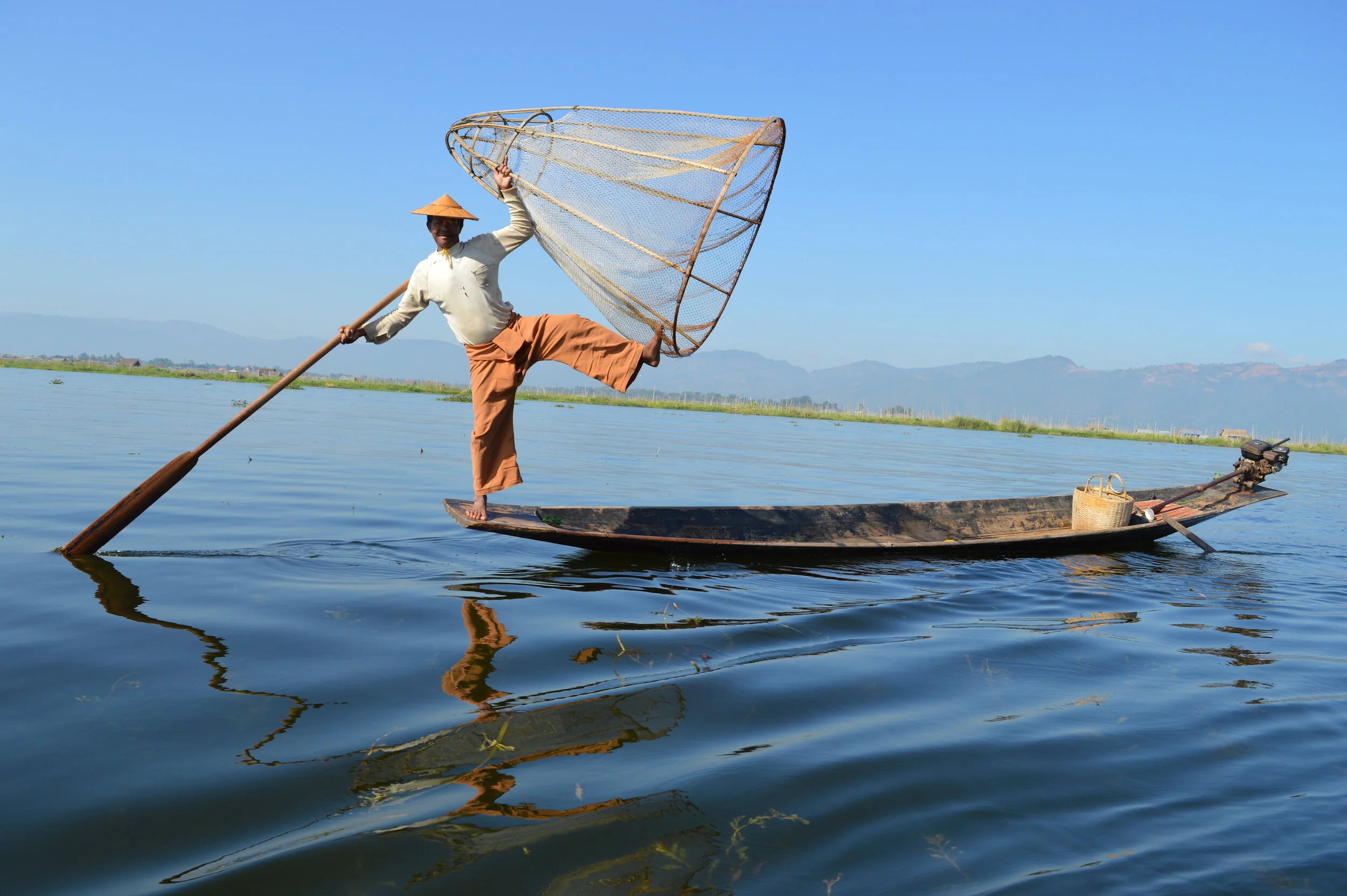
Intha fisherman showing off his one legged rowing skills on Inle Lake

Intha fisherman showing off his one legged rowing skills on Inle Lake

A photo of the Intha fisherman with their unusual one legged rowing technique, hooking a leg around a long oar to scull across glassy blue Inle Lake is perhaps Myanmar's most iconic image and used to sell the country worldwide. The best way to explore Inle Lake is on a day trip, slicing through the waters on a long tailed boat.  Tours include visits to fishing villages with their houses built on stilts and silk weaving and cheroot rolling industries. Stops are also made to watch blacksmiths and silversmiths at work and to see the floating market that moves between the area's villages on a five day rota. Inle Lake didn't disappoint and there were unmissable photo opportunities at every turn. I was also excited to hear that  Balloons over Bagan have  recently launched a ballooning experience over the Lake  and another extraordinary way to experience one of Myanmar's most scenic attractions.    Breakfast is taken next to one of the beautiful Shan villages wherever the balloon lands.

Getting off the beaten track, visiting a Kayan tribe village

Getting off the beaten track, visiting a Kayan tribe village

Closed for over half a century and only recently opened to visitors, Kayah state is home to nine distinct ethnic groups, which diversified and evolved from Karen culture.  The biggest groups are the Kayah, Kayan, Bre, Lahta, and Yinbaw. Many tribes still practice their indigenous customs, handed down for centuries and dress in their traditional costumes including wearing heavy brass neck rings. Never one to miss a chance to dress up, I got to feel the weight of the brass rings by trying on just a couple.

Ngapali Beach

Ngapali Beach

For those who follow me on social media will know how much of an aquaphile I am. There's nothing I like more than being by the water, on the water or more importantly in the water. No trip therefore would be complete without giving a rundown of a few of my favourite swimming pools and swimming spots. After touring Myanmar's main sites, laid back Ngapali Beach is the place to relax and enjoy a spectacular sunset from a practically empty palm fringed golden sand beach, untroubled by touts. Unlike some resorts in neighbouring Thailand, Ngapali is still relatively unspoilt with just a small number of beach front hotels. I stayed at Sandoway Resort and enjoyed the balmy blue waters of the Bay of Bengal, took a boat trip for a spot of snorkelling and visited the traditional fishing villages that line the coast.

Infinity pool heaven at Inle Lake View Resort and Spa

Infinity pool heaven at Inle Lake View Resort and Spa

The Inle Lake View Resort and Spa is the only deluxe boutique hotel of international standard on the shores of Inle Lake with an infinity heated swimming pool with views out across the lake that got the big thumbs up from me. It was a super social pool as most guests are out and about during the day on excursions but happy to meet up in the pool or adjoining jacuzzi at the end of the day, to watch the sunset and swap tales of this magnificent country. 

To find out more about Myanmar visit https://www.tourismmyanmar.org/

Petra visited Myanmar in December 2019. If you would like to know more about this destination, don’t hesitate to give us a call or to send us an email.

5 Ways to Be a More Sustainable Traveller

Planning a holiday has never been easier. But what does that mean for local communities, wildlife and the environment?

Being a traveller in the modern world involves certain responsibilities as one is an active part of the largest industry in the world. For far too long people have been focusing solely on the beneficial aspects that tourism can provide. It’s time that we kickstart a conversation and raise awareness around the potential negative impacts of this beautiful industry and how travellers can play their part in fixing its current issues.

Scenic train travel | make travel matter |  Responsible tourism | travel agent in London | bespoke holidays | sustainable travel |  holiday ideas | family holidays | romantic breaks
  1. Transport. The most essential aspect of a trip is transport.

Although a great number of holidays take place at very large distances from home, it is understandable that sometimes one cannot escape the burden of leaving a big amount of CO2 emissions behind but there are many ways of reducing some of the harm produced. One might be to take fewer but longer holidays rather than numerous short ones. Another method could be to donate money to charities or organisations such as Trees for Cities or World Land Trust in order to offset some of the CO2 produced. You can also check Flightnook for more information on how to lower your travel pollution. However, when possible, opt for a train journey. Think of all the benefits of allowing yourself time to enjoy a scenic train journey through the Alps or through the West coast of Scotland.

Sustainable travel destinations.jpeg

2. Choose a sustainable travel destination. We understand that it isn’t always easy to be a responsible traveller when the system in the country you’ve decided to visit doesn’t allow you to be one. Why not reverse the situation in your favour, as well as Mother Nature’s, and choose to visit a country based on how environmentally friendly their internal system is.

Destinations such as Costa Rica, Belize and Slovenia are only a few worth mentioning in their fight against unsustainable tourism. More and more countries are developing initiatives to slowly but surely become a guilt-free option in the modern traveller’s mind.

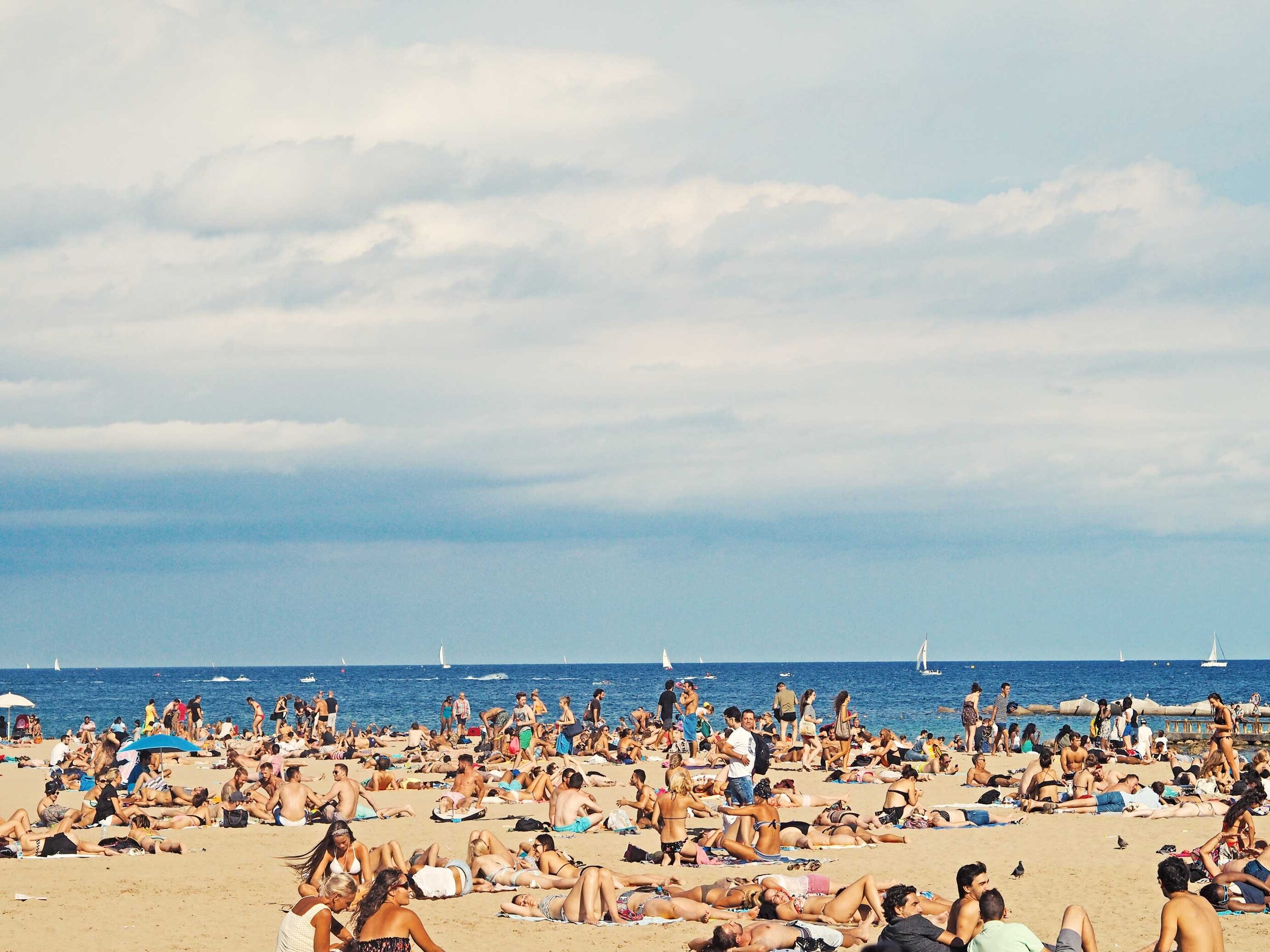
Beach Barcelona

3. Potential positive outcomes that don’t always go to plan. The industry could bring a lot of money to the country, however, it often ends up in the pockets of massive corporations. Think and act local and support small independent businesses. Jobs might be created to satisfy the market’s demand. However, jobs could be seasonal which makes the local community’s life harder during the offseason. New facilities which are built for tourists are used by the locals too but it can lead to overpopulation, traffic jams and discomfort for the nearby wildlife. Consider travelling outside peak season to ensure equality across the board.

Children in Chupah, Vietnam  | make travel matter |  Responsible tourism | travel agent in London | bespoke holidays | sustainable travel |  holiday ideas | family holidays

4. Give to the right cause, the right way. A large number of very well-intended travellers bring sweets, used clothes and various other items to be handed out to the villagers or kids in developing nations. Although it can feel right at the time, please do avoid doing so. It can cause conflict between the members of the community and encourage a culture of dependency.

There are numerous registered local charities and organisations with whom you can work alongside or donate money instead. A couple that we can recommend are Child Fund or Pack for a Purpose.

make travel matter |  Responsible tourism | travel agent in London | bespoke holidays | sustainable travel |  holiday ideas | family holidays

5. Say no to plastic! It’s a mindset that everybody will have to attain one way or another. Plastic really does take roughly 500 years to decompose. It’s a ridiculous amount of time to wait for it to disappear, especially when more than 50% of the entire plastic ever produced was simply discarded.

Opt for locally sourced water in glass bottles (or just a coconut!) and make the conscious effort to bring a tote bag when you’re out shopping for souvenirs or food. You can dramatically reduce single plastic use by rewiring a couple of patterns in your behaviour.


If you have any more questions or are simply curious as to what steps you can make towards becoming a more conscious traveller, please don’t hesitate to drop us an email.

Photos by:

Noah Buscher on Unsplash

Balazs Busznyak on Unsplash

Larm Rmah on Unsplash

Madagascar

Madagascar is a strong contender for offering the most distinctive wildlife holidays on the planet. The island separated from the African mainland some 165 million years ago and much of its fauna and flora have evolved in a unique way - an astonishing 80% is endemic. Madagascar’s almost bizarre array of wildlife echoes the 88 million years the island spent in isolation. Evolution got to work to produce some spectacular species and the island is now one of the most biodiverse regions in the world. It’s so unique that the country is sometimes called the eighth continent. The blog post below belongs to our guest writer and beloved client, Sarah Mortimer.

Madagascar landscape | make travel matter |  Responsible tourism | travel agent in London | bespoke holidays | sustainable travel |  holiday ideas | family holidays | romantic breaks

You’ve heard the one about an elephant making a trunk call..? Well, now I have seen lemurs in Madagascar in full talk-back mode!

Walking quietly through the rainforest of Andasibe National Park we and our tour guides were on the lookout for some of the island’s many indigenous species that make Madagascar such a treasure trove of flora and fauna: chameleons, birds, butterflies and any number (and, it seems no exact number established, such is the range of species and sub-species) of lemur.

wildlife in Madagascar | responsible tourism | sustainable tourism |

The birds are beautiful, the chameleons extraordinary, the landscapes amazing… but my own particular quest was to see – and hear – the indri lemurs.

The biggest of the lemur family, with sticky-out ears, a rotund bottom with barely visible tail, these black and white animals look more like a teddy bear – and every bit as cute. But it is their ‘song’ that enchants me: a haunting wailing sound more akin to whale-song in its tuneful cry than a call of the canopy. But having heard their siren call from afar early that morning I was desperate to see these songsters.

Indri lemur in Madagascar | sustainable holidays | make travel matter | responsible tourism

Our guide located a small group of these characterful little beings, and I watched them with delight. Then, right there, miles away from urban life and so deep in the Madagascan (I love the ‘taste’ of that word – as much as the taste of their chocolate!) forest, 21st-century phone-tech came in to play.  Our guide took his mobile phone from his pocket, googled YouTube, and relayed a sound recording of an Indri group’s calls. In response to that recording, our own little troop raised their heads, opened their mouths, and sang their baleful siren song to claim loudly (actually, very loudly) that this patch was theirs! I was entranced by this concert performance, albeit prompted by a degree of manipulation – courtesy of Messrs Apple, Google, and YouTube. But our gang didn’t seem too perturbed: they simply rang out their peal of territorial calls.

So…maybe there IS an argument for phones in the forest – but for appropriate on-line connection only. Ocado is a step too far…

Sarah Mortimer visited Madagascar in October 2019. If you’d like to hear more about our trips to the African continent, don’t hesitate to get in touch.

The Galapagos Conservation Trust Cruise

Galapagos Conservation Trust (GCT) is the only UK charity focussed solely on the conservation of one of the most unique and ecologically important, but vulnerable, areas in the world. With over 20 years of experience, they partner with Ecuadorian authorities, NGOs, local communities and leading researchers to support impactful science, conservation and education programmes across the Archipelago. The Galapagos Islands is a volcanic archipelago in the Pacific Ocean. It's considered one of the world's foremost destinations for wildlife-viewing. The incredible diversity of wildlife found in Galapagos is what makes this volcanic archipelago so very special. The Islands are situated at the meeting point of several large oceanic currents, giving them a truly unique array of habitats and an eclectic mix of wildlife.

The island of Isabela in the Galapagos | responsible tourism | make travel matter | sustainable tourism | travel agent in London

Further to our partnership with GCT, we’re now helping in recommending this absolutely unique, edifying cruise trip. In June 2020, there will be running a bespoke Galapagos Conservation Trust (GCT) cruise, offering you the perfect way to see the Archipelago in a comfortable, intimate and sustainable manner, with a group of only 15 people.

Accompanied by a GCT staff member throughout the trip, you will have exclusive opportunities to visit projects funded and delivered by GCT. You will also meet passionate conservationists working on the Islands. What’s more, you can travel in the knowledge that your trip will be directly supporting the conservation and sustainability of the Archipelago.

Galapagos Cruise | sustainable tourism | responsible tourism | make travel matter

Watch giant tortoises in the wild and meet the scientists working to protect them.

Swim and snorkel with beautiful reef fish, turtles, rays and endangered Galapagos penguins.

Breathtaking encounters with pink flamingos, blue-footed boobies, waved albatross, pelicans, sea lions, finches, terns and more.

Visit a world-leading restoration project on Floreana island. You will meet scientists working to restore the island and reintroduce locally extinct species, and of course calling at Floreana’s famous Post Office Bay.

Be thoroughly spoilt, with delicious food and attentive staff on board Beluga, a ‘Superior First Class’ motor yacht owned by Enchanted Expeditions, a respected Galapagos company.

Meet with conservationists working to protect Galapagos marine life, including endangered sharks and the magnificent whale shark.

Explore the historical city of Quito.

Wildlife in the Galapagos | make travel matter | responsible tourism  | sustainable tourism

For pricing and detailed itineraries, you can simply get in touch and we’ll send you the complete guide.

Jamaica

If you are after a restful holiday in the Caribbean but also don’t want to feel like you are stranded on an island with nothing to do then Jamaica should be on the cards. It is the third largest island in the Caribbean and offers rich history as well as varied landscape.

Jamaica - rich in heritage & history

Jamaica - rich in heritage & history

Being a larger island, it is ideal for twin centre holidays. What I liked most about Jamaica is its lush natural beauty. You get beautiful white sandy beaches, as well as dramatic cliffs of Negril and then within only a short drive into the interior you are surrounded by verdant hilly countryside with colourful local villages. Do not think that Jamaica is only about the beach, there are beautiful waterfalls, spectacular Blue Mountains, Appleton Estate rum distillery, a world famous Blue Mountain coffee plantation as well as world class snorkelling and diving.

Maryna by a rum shack

Maryna by a rum shack

We started off our trip with a direct BA flight from Gatwick to Kingston. Upon arrival we picked up our car for a week and headed towards Ocho Rios, a port town on the north coast of Jamaica. A former fishing village, which is now a resort town with a busy bay beach lined with hotels. We have visited two properties whilst in Ocho Rios, Couples Tower Isle as well as Jamaica Inn. Couples Tower Isle is an all-inclusive adults-only resort and what we liked most is the intimate picturesque setting, friendly service and fresh good quality food. We also enjoyed the fact that almost all water sports and excursions were included in the package, even snorkelling boat trips and diving.

Sunset over Jamaican sea

Sunset over Jamaican sea

Jamaica Inn needs no introduction as it often gets voted as one of the best hotels in the world. This luxurious boutique hotel has been second home to numerous celebrities as well as weary travellers, who come to completely unwind in the hotels peaceful and classy setting. We particularly liked their over the water suites and very private cottages with direct sea access. 

The surrounding parish of Saint Ann is home to rainforest, rivers and waterfalls with Dunn’s river waterfalls being the most famous. I have seen plenty of waterfalls during my travels but never did I see one falling directly into the sea. Why not reward yourself with a dip in the sea after climbing the waterfall?

Dunns River Falls, Jamaica

Dunns River Falls, Jamaica

Our next stop was Montego Bay, the main tourist area of Jamaica boasting of world-class hotels and wide sandy beaches. Our main aim was visiting the Luminescent Lagoon in Falmouth about an hour away from MoBay. At night, the lagoon sparkles and glistens when disturbed, as microscopic organisms produce an eerie glow, reflecting the outlines of fish and other objects in the water. The Luminous Lagoon is said to be the largest and most brilliant of four in the world, a fact that continually attracts and awes visitors and scientists from around the world. 

Unfortunately, the glow wasn’t too strong when we went as it depends on many factors, like brightness of the sun during the day and presence of the moon, but we were told that it was much stronger the day before. I guess we will need to come again!

Typical Jamaican house.

Typical Jamaican house.

After Montego Bay we continued on to Negril, or the Capital of Casual as it is known. Even with only one pair of shorts and two t-shirts you will never feel underdressed! When most people think of Jamaica they most probably have an image of Negril in their heads – a place that is relaxed, laid back and vibrant with reggae playing on the background. As opposed to Montego Bay, Negril is mostly about small family owned hotels and we stayed in one of those, a luxury boutique hotel called Sandy Haven. It is located on the famous 7 mile beach and what we liked is that we were located in the epicentre of the action yet the hotel itself felt like a peaceful refuge. The pool and the garden area felt like haven indeed combined with one of their delicious rum punches – we were told that the secret was mixing 7 different rums for each mile of the beach. Sandy Haven is an excellent choice for those who want to feel like they are actually in Jamaica and are not shy to have a friendly banter with local beach vendors selling coconuts, fruit and traditional patties. It is in a fantastic location for long beach walks and numerous local beach bars, why not stop in one of them for a drink of Red Stripe and a grilled lobster meal?

Room at Sandy Haven, Jamaica

Room at Sandy Haven, Jamaica

After Negril we were heading back to Kingston with a stop at the Appleton Estate on route for the tour of the distillery and some rum tasting. The drive to the Appleton estate is very enjoyable and goes through beautiful countryside with quaint villages. The estate itself is beautiful and we enjoyed learning about its history and tasting different types of rum.

Three hours later we arrived at our final destination – Strawberry Hill Jamaica Luxury Hotel. With its cluster of cosy and private Post-Plantation cottages, vivid tropical gardens and Infinity swimming pool, the hotel without a doubt was a highlight of our trip. It is no wonder that Strawberry Hill was selected by The New York Times as one of the “1,000 Places To See Before You Die.” Strawberry Hill is steeped in history and its restaurant and the lounge area are full of interesting artefacts.

Strawberry Hill, Jamaica

Strawberry Hill, Jamaica

If you fly to Kingston, I can definitely recommend staying a couple of night at the Strawberry Hill before flying back. Not only is the setting spectacular and peaceful but you will also have a chance to go for a hike in the Blue Mountains or visit the coffee plantation that produces the best coffee in the world. Or how about visiting a pretty historical Anglican chapel located 10 minutes walk from the hotel? You will pass a local school and will have a chance to experience a local way of life. 

We absolutely loved our holiday to Jamaica, filled with sunshine, smiling people the sound of steel drums and reggae music. Highly recommended!

Maryna travelled to Jamaica in October with Travel Matters. Do contact us if you’d like us to recommend and help you arrange a trip yourself.

Seven days in Kenya

The taxi delivered us to the Nairobi Air Safari terminal in early morning darkness. A smiling, sweaty, beanie clad face greeted us, the Manager unlocking the terminal door. Welcome to Kenya where the locals run to and from work. We boarded our flight out to the Mara, with a full view of the cockpit and pilots. The vista was beautiful, glimpses of open plains, mountains, local villages and herds of antelope. We were headed for Karen Blixen Camp, one of the oldest lodges in the Mara North Conservancy. The plane touched down on the red earth and we were greeted by Daniel, our driver and guide. It was a short but breathtaking 30 min trip back to the Lodge; we saw antelopes, giraffes, zebra, baboons, topi, and eagles all within this short drive. Daniel as we were soon to learn was very patient and wonderfully knowledgeable.

Arrival at Mara North airstrip.

Arrival at Mara North airstrip.

After a warm welcome we were shown around the Karen Blixen Camp. It has a prime location on a curve in the Mara River with a large, extended family of hippos living opposite, the noise of this happy family echoes throughout the lodge. You can spend hours sitting in the garden (with a glass of wine) happily viewing the hippos, along with giraffe and elephant families as they come down to the water to drink. One evening while warming ourselves by the outdoor fire-pit, we watched a lioness wander along the riverbank in the moonlight, occasionally stopping to drink. There is an overwhelming sense of wonder at the wildlife that surrounds and occasionally enters the camp, a reminder that this is their home and we are only visitors. One night we were woken by the sound of zebra hooves on our veranda and the security team safely driving them away.

Our accommodation at Karen Blixen Camp.

Our accommodation at Karen Blixen Camp.

The Lodge is beautiful, made from local wood and a thatched roof, while our raised tent was a step back in time but with all the comforts of home, there is a large bathroom and gorgeous outdoor shower where birdlife watch you bathe. The covered, wooden veranda with day-bed looks out upon the river rapids entirely surrounded by native bush. You can watch the crocodiles sunbathing on the opposite side of the river. The tent is reminiscent of “Out of Africa” the famous novel Karen Blixen penned. The lodge has a lovely swimming pool, surrounded by trees and flowers and a day spa. We left our massage relaxed and smelling of native oils. The food and drink at Karen Blixen is wonderful, breakfast is provided on return from the morning safari and there is the opportunity to sample local Kenyan dishes. The camp provides employment and training for the local community, with a tree nursery, cooking and computing classes and a shop selling locally crafted jewellery.

Hippos in the Mara River opposite Karen Blixen Camp, Kenya

Hippos in the Mara River opposite Karen Blixen Camp, Kenya

Of course the highlight of any trip to Kenya is the safari. We ventured out every morning and again in the evenings. Snuggled under local blankets and with a thermos of coffee, Daniel imparted his local knowledge and infectious love of the wildlife. The camp is in the Mara North Conservancy just outside the National Park, this does mean that there is a little more flexibility and less congestion when viewing the wildlife. We were often viewing animals up close, without another truck in sight and there is a fond camaraderie amongst the drivers, game keepers and local farmers.

Daniel - our more than capable and knowledgeable driver & guide from Karen Blixen Camp

Daniel - our more than capable and knowledgeable driver & guide from Karen Blixen Camp

The highlights included multiple lion families all with cubs, herds of elephants washing in the river, cheetah hunting and a night drive where we saw a hyena take a baby antelope. Every game drive was different and Daniel ensured we were always surprised, even providing a surprise picnic breakfast one morning complete with chefs and white table cloths. On our last day we ventured into the Mara National Park, which is about a 2 hour bumpy ride away from the lodge. The vastness of the plains and scale of the herds is amazing. It was early in the migration season and the wildebeest were grouping, although we didn’t see a actual river crossing (some had taken place the day before) it was interesting to see the points of the river where this happens and view the waiting crocodiles.

Breakfast on the plains in Masai Mara, Kenya.

Breakfast on the plains in Masai Mara, Kenya.

After 3 nights at the lodge we returned by small plane back to Nairobi for a quick overnight before we embarked on the train journey across to Mombasa. The new fast train line between Nairobi and Mombasa has reduced the journey to 6 hours, stopping at local stations on the way and crossing the Kenyan National Park. You can view elephants and zebra from the train window and arrive at the new, modern Mombasa rail station. It was then a short taxi ride to the Serena Beach Resort hotel on the northern coast. This lovely resort provided some relaxing beach time before returning home.

The pool at the Serena Beach Resort & Spa, Kenyan coast

The pool at the Serena Beach Resort & Spa, Kenyan coast

The grounds are beautiful with palm trees, white sand beach and turtle sanctuary, if you are lucky you may just catch a baby hatching. We played tennis under an audience of monkeys and relaxed poolside under the frangipani trees. Snorkelling, diving and windsurfing are all on offer. It was then a short flight from Mombasa back to Nairobi and onto London.

Two male cheetahs before a chase.

Two male cheetahs before a chase.

Kenya is magical, and viewing the animals in their natural habitat is breathtaking. I can see why visitors return again and again, each holiday would be different according to the seasons and movements of the wildlife. Travel Matters researched and booked everything down to the last detail, even guiding us through the visa process, it made for a wonderfully relaxing holiday.  Kenyans are rightly proud of their country and delighted to share all it has to offer, it was a privilege to spend a week in this wonderful country.

Safari drive in the Masai Mara.

Safari drive in the Masai Mara.

This guest blog post is by Katrina Clarkson who travelled to Kenya in June 2019 with Travel Matters. She was hosted by Karen Blixen Camp and Serena Hotels during her visit.

Eat, Pray, Sunbathe

This year I decided to celebrate the new Wizz Air route Luton to Eilat by booking my holiday to Israel and Jordan. Afterall visiting Jerusalem – the heart of the ancient world and a sacred city of three religions – has always been on my bucket list. Israel offers so much more than religious sites but the thought of walking on the ground that once was trodden on by Jesus Christ is simply mind-blowing. Also I have always found admirable how the Jews were able to preserve their language and culture without their own territory for many centuries.

Although Israel is a small country -  you can cross it from top to bottom in 5 hours – there is so much to see and experience, it is a real melting pot of traditions and cultures. Its quite interesting to see how much cities within one country can differ. Take Tel Aviv for example – a young, modern, cosmopolitan city, with a fantastic nightlife and dining scene, with fashionable young crowd wearing short skirts. And yet only an hour away there is Jerusalem, where behaviour and clothing are as conservative and orthodox as could be. Come Friday/Saturday, the city comes to a standstill with most shops/restaurants shut due to Shabbat. Even roads get car free.

The Wailing Wall, Jerusalem

The Wailing Wall, Jerusalem

The Old City covers an area of only one square kilometer, yet the density of the shrines of different religions, attractions, monuments of architecture surpasses all expectations. Here are the Temple Mount and the Wailing Wall - for the Jews, the Church of the Holy Sepulcher and Via Dolorosa (Path of Sorrow) - the road Jesus Christ walked before his crucifixion - for Christians, the Dome of the Rock and the Al-Aqsa Mosque - for Muslims. But this is not an open-air museum  - here ordinary people live ordinary lives.

The Wailing Wall, Jerusalem

The Wailing Wall, Jerusalem

Tel Aviv is a brilliant city break destination. It was quite interesting to learn that the city is very young and has been originated only in the 50s. It attracts visitors by its wide Mediterranean beaches, impressive dining scene and sunny weather almost all year round. I particularly liked cool little restaurants in the old port of Jaffa. In general I was really impressed with the local cuisine and its generous use of fragrant herbs and spices. Even street food was really delicious and fresh – homemade humus, falafel wraps, kebabs – all washed down with freshly squeezed pomegranate juice or local wine.

Maryna in Tel Aviv

Maryna in Tel Aviv

For those with health issues The Dead See might be the answer with its balmy medicinal air and water so thick that it appears oily. To those of you who want to visit I would recommend to go pronto – the water levels recede every year so in the near future we might lose this miracle of nature.

The Dead Sea

The Dead Sea

Eilat is a resort town on the opposite side of Israel, squeezed between Egypt and Jordan and thus located on the shores of the Red Sea. I found it to be a good winter sun destination, I travelled in the end of February yet the water temperature was quite swimmable and we managed to top up our tan levels nicely. Eilat may look all about huge hotels and concrete but its underwater world is rich and colourful and is diver’s paradise.  

From Eilat we made our way across the border to Jordan.

Our accommodation in the Wadi Rum desert, Jordan

Our accommodation in the Wadi Rum desert, Jordan

Our first destination was Wadi Rum desert known for its fantastical Martian sceneries. Location really is out of this world, no wonder many Mars based movies were shot here, including the Martian with Matt Damon. We spent our night in a desert camp, in a dome overlooking the desert and the starry sky. Unfortunately we were not able to go on a hot air balloon trip as planned due to a poor weather, but a jeep safari was a good alternative.

Wadi Rum, Jordan

Wadi Rum, Jordan

Petra was our next stop. I think it is diffucult to find a person who hasn’t heard of this UNESCO heritage site. For me this was a classic case when I expected less but was completely blown away. First of all, the scale of it just bewilders. It is the whole lost city, not just the famous Treasury appearing on all photos. In fact the hike from the entrance to the farthest point, the Monastery is about 5 km, no wonder many travellers go for a two or even three day pass. The scenery around Petra doesn’t disappoint either, in fact some parts of it were really en par with the Panorama route in South Africa. A fantastic mixture of orange and green, with occasional bell sounds from grazing goats.  

All in all it was a fantastic holiday saturated with sights, natuare and delicious food, I honestly cant recommend highly enough.

Maryna travelled to Israel and Jordan in February 2019 Please contact us if you would like us to arrange a bespoke holiday for you to Israel or Jordan.